More than words
Can a word make you actually feel what it describes? Here's the answer
Published on October 27, 2026
A word like "buzz" can bring a sound to mind, while "squish" can almost make you feel something soft under your fingers. You’ve probably been using these words your whole life without realizing how unusual they are: they don’t just describe an experience; they seem to recreate part of it through their sound and form. These fascinating words are called "ideophones," and they can capture everything from movement and texture to sound or light. Here are 10 surprising facts about the words you already know, but probably never thought about this way.
Can a word sound like its meaning?

Unlike ordinary words such as "table" or "dog," ideophonic words are exceptionally vivid words that use sound symbolism to evoke sensory experiences. These words name something we experience through our senses, and their sounds can give us a hint of what that experience is like.
Ideophones’ forms often seem to symbolically echo or approximate their meaning. Words such as "buzz" and "splash" evoke sounds, "squish" suggests a particular texture, while "zoom" and "zigzag" suggest movement.
They aren't limited to sounds

Ideophonic words are not the same as onomatopoeia. They don’t merely imitate a sound; they can evoke texture, temperature, light, movement, and other physical sensations. In other words, an ideophone can sometimes make you almost feel or see what it describes, simply through the way it sounds.
For example, words describing surfaces can suggest a particular texture through their sound, such as something "smooth," "sticky," or "rough." Words like "twinkle," "glimmer," and "flash," on the other hand, connect sound and structure with the way light appears to move or change.
They aren't necessarily universal

Many languages have ideophones, but each language has developed its own set of them. In other words, ideophones are not universal, and they often don’t translate neatly from one language to another.
The same experience can have completely different "sound effects" depending on the language. For example, in Japanese, kira-kira (キラキラ) evokes the sight of repeated flashes or sparkles of light. In English, we might describe the same visual effect with words such as "sparkle," "twinkle," or "glitter". Japanese speakers, just like English speakers, can feel that these words make a symbolic connection to what they describe; the fascinating part is that each language does it with very different sounds.
The motion connection

As we mentioned, ideophones can represent or approximate different sensory experiences through their form and sound. And one of the most surprising is action and movement.
A great example is "zigzag." The word itself seems to move as you say it; the alternation between a front vowel (/ɪ/) and a back vowel (/æ/) forces the tongue to shift back and forth, physically echoing the turning motion of a zigzag. There are other good examples, too: "ping-pong" shifts between contrasting vowel sounds to suggest a ball traveling back and forth across a table, while "tick-tock" alternates between high and low vowel sounds, echoing the swing of a pendulum.
They make you move

In addition to evoking a sensation, ideophonic words can sometimes make you move your hands or body as you say them, almost as if you were physically illustrating what the word describes.
Speakers often pair ideophonic words such as "zig-zag," "glimmer," or "flimflam" with spontaneous, iconic hand and body gestures that mimic the word’s shape, motion, or quality. This happens because both ideophones and some hand gestures rely on iconicity, the resemblance between form and meaning, to convey sensory imagery. These pairing actions suggest that ideophones can function more like depictions of an experience than arbitrary labels attached to it.
Rhyming and doubling: English uses reduplication

When you say words like "chit-chat" or "helter-skelter," you’re using ideophones that rely on reduplication. But what exactly does that mean?
Some ideophonic words are created through a process called reduplication, which involves repeating or echoing similar sounds, syllables, or rhyming parts of a word. The repetitive sound can mirror the repetitive, chaotic, or rhythmic quality of what the word describes. For example, "higgledy-piggledy" evokes something jumbled or chaotic, while "mumbo-jumbo" suggests confusing or meaningless language. In both cases, the word’s playful repetition helps reinforce the sense of disorder or confusion.
Some languages have thousands of them

English has some ideophonic words, but other languages take these sound-and-sensation words much further, and use them in ways that may feel strange to English speakers.
For example, both Japanese and Korean have highly structured systems of ideophones that can describe physical states, moods, and even silent movements. In English, ideophones generally function like ordinary verbs, adjectives, nouns, or adverbs, but some African languages such as Zulu, Xhosa, and Chichewa treat them as a distinct grammatical class, with the ability to function as independent predicates or intensifiers.
Their meaning can depend heavily on context

Ideophonic words can be context-dependent. That means that the same word may take on different shades of meaning depending on what is happening, who is speaking, and how the word is delivered.
Because ideophones often describe sensory experiences rather than simply naming objects, speakers use context to make their image clear. Tone, facial expression, gesture, and the surrounding words can all help shape meaning. The word "pop," for example, can describe the sudden sound of a balloon bursting, but we also use it for something appearing suddenly, as in "the question just popped into my head", or for a quick, sharp movement, as in "he popped up from his chair."
Especially common in storytelling
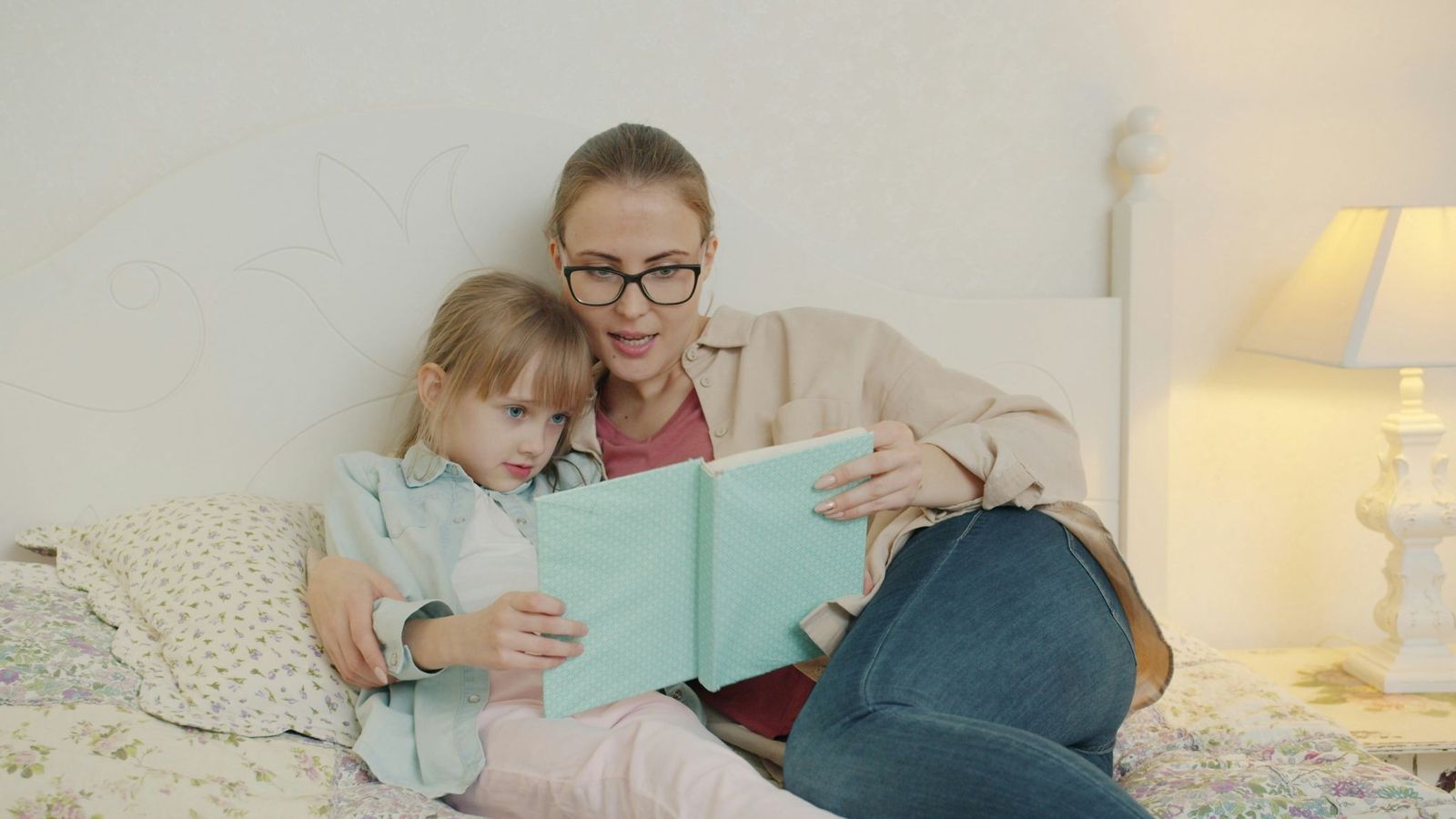
The gestures that often accompany ideophones aren’t the only thing that brings them to life; they can also be accompanied by changes in tone, voice, rhythm, and facial expression. That’s because ideophones are an important part of storytelling in many languages.
Because they don’t simply name an object but can depict an experience, ideophonic words can be "acted out" in oral narratives, giving the listener a much stronger sense of what is happening. The way you pronounce, stretch, emphasize, or repeat an ideophone can make an event feel immediate and more vivid, rather than simply telling the listener what happened.
They often use unusual sound patterns

Ideophones are rebels of the language, often breaking the phonological rules that govern ordinary words.
As we’ve seen, ideophones generally have a perceptible relationship between their form and their meaning, something that is unusual among ordinary words. They also have a tendency to push the language’s sound system further. As with reduplication in "higgledy-piggledy," ideophones can feature unusual phonemes, unexpected consonant clusters, or even click sounds that are rarely, if ever, found elsewhere in a language’s regular vocabulary.


