Do you speak newsroom?
Journalism's oldest tricks: discover what lies behind the newsroom lingo
Published on November 2, 2026
Iconic movies like All the President's Men (1976) and Spotlight (2015) made us feel like the newsroom was the most exciting place to be, chasing down the most controversial stories and giving the world a chance to know them. And a lot of the time, that really is the exceptional side of a journalist's job. Other times, it's just as bureaucratic and monotonous as any other job out there. Are you a journalism expert? Discover the real meanings behind the newsroom lingo.
"Stop the Presses!"

Picture a newspaper rolling off the printing press when a huge story suddenly breaks. An editor yells, "Stop the presses!" The machines screech to a halt, the front page gets swapped out, and whatever's already printed might just get tossed. Newsrooms have hit moments like this again and again throughout history.
It can mean two major things: something huge just happened, or someone caught a serious last-minute mistake. These days, newspapers run on computers instead of setting type by hand, but stopping production can still cost a lot. Editors have to redo layouts, make new printing plates, and get everything running again.
"Byline"

A "byline" tells readers who wrote an article. It usually appears at the beginning of a print or online story, although it may also appear at the end. Most bylines include the writer's name, and some also mention their position at the publication. Before bylines became common, newspapers used signatures to identify outside contributors. This practice dates back to colonial times, when readers assumed the newspaper’s editor wrote most of the unsigned material. If a letter or article came from someone else, a signature showed that the words weren’t the editor's own.
However, many signatures were actually pseudonyms, especially during the colonial and Revolutionary eras. Criticizing British officials could lead to retaliation, and angry readers sometimes challenged writers to duels, attacked their offices, or ambushed them in the street. For journalists facing those dangers, using a pen name was the way to stay safe.
"Deadline"

Every newsroom lives and dies by deadlines. In journalism, a "deadline" is basically the point of no return, the last possible second a reporter can turn in a story before it's too late for print or air.
You've probably heard this word a million times, but you probably didn't know where it came from. Back during the Civil War, a "deadline" was an actual line marked around prison camps like Andersonville. Guards had orders to shoot any prisoner who dared cross it. The term then drifted into factories, where it marked the age cutoff for hiring workers, before newspapers scooped it up around 1919 and gave it the meaning we know today: the absolute last second you could get copy to the printer.
"Beat"

"Beat" reporting means sticking with the same topic. Instead of covering a school meeting one day and a baseball game the next, a beat reporter focuses on one area, such as local politics, education, crime, sports, health, or the White House. Over time, they get to know the people involved, build reliable sources, and notice details that another reporter might miss. They also keep following stories after the first headline. This makes the coverage more useful because readers learn what happened next, not just what was announced.
Helen Thomas is a famous example. She covered the White House for almost five decades, reporting on ten presidential administrations from John F. Kennedy to Barack Obama. After so many years on the same beat, she knew the White House inside and out and became famous for her direct questions. That is the advantage of beat reporting: The more closely you follow a subject, the more of the story you can see.
"Scoop"

Every journalist would die to land at least one major "scoop." A scoop is an exclusive news story no one else has published yet. But a scoop isn't just any news story; it's a really significant one, the kind that gets everyone talking, like a political scandal or classified information.
Landing a major scoop helps a journalist build professional credibility and prestige, both for them personally and for the newsroom as a whole. It means they knew exactly how to track down the story, with caution and professionalism.
"Above the Fold"
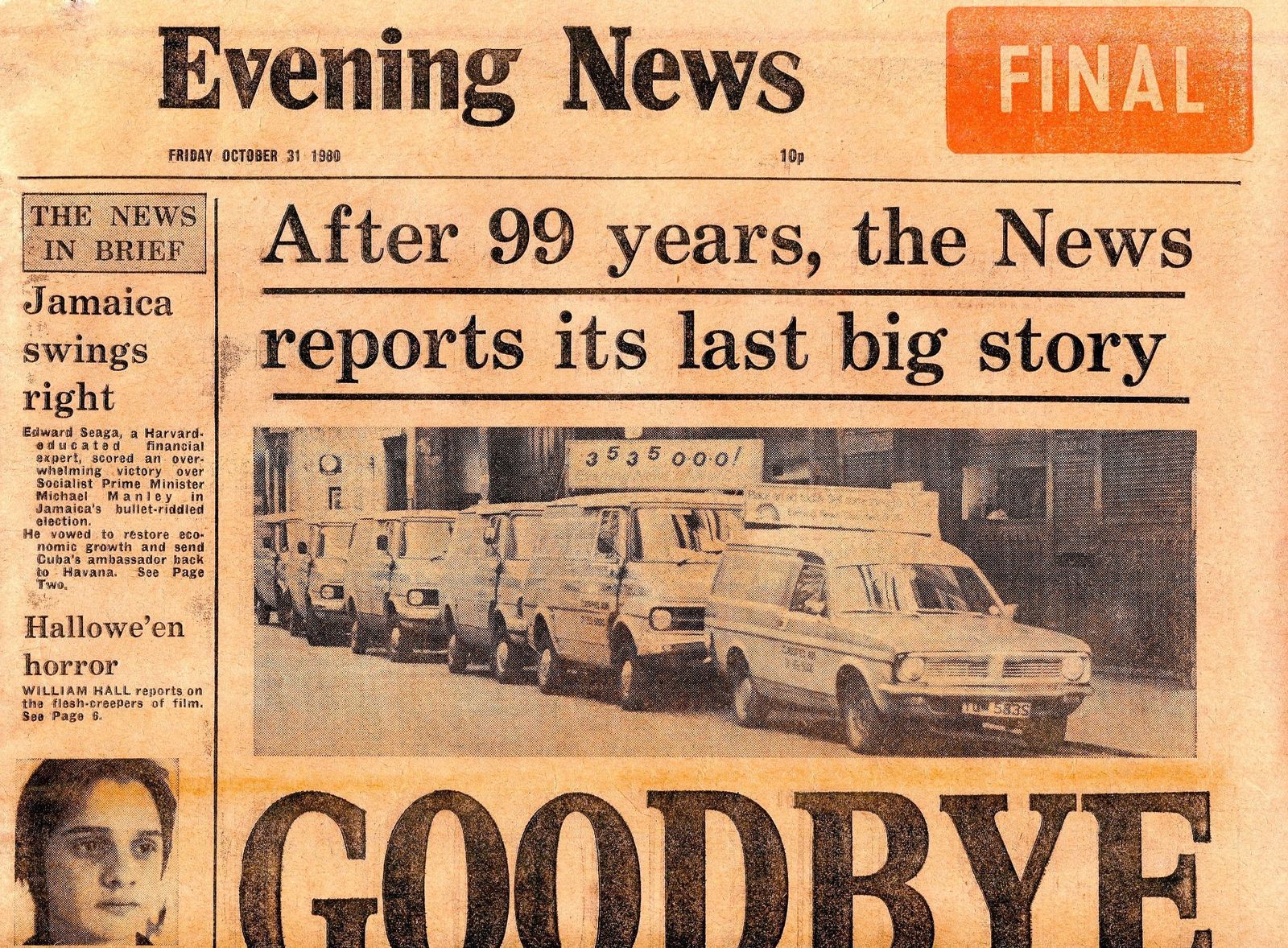
"Above the fold" refers to the top half of a newspaper's front page. The phrase comes from the way newspapers were traditionally folded in half and displayed at newsstands. People could only see the upper section, so editors placed their biggest headlines, photos, and most important stories there. Advertisers also paid more for this highly visible space.
The expression carried over online. Today, "above the fold" describes the part of a webpage readers see before scrolling. Unlike a newspaper fold, what appears above the fold changes depending on screen size and device.
"Dateline"
A dateline answers two basic questions: Where did the news come from, and when was it sent? It is the short line that appears before the first sentence of a news story or press release. It usually includes the city of origin, followed by the state or country and the date.
The location gives readers and editors immediate context. Before readers reach the first fact, the dateline has already placed the story on the map and established how current it is. It doesn’t try to persuade the reader; it simply presents essential information in a familiar format.
"Masthead"

The "masthead" tells you who is behind a newspaper, magazine, or website. It usually lists the main people who put the publication together, from the publisher and editor-in-chief to section editors, writers, and designers. It may also include contact details, subscription information, and the name of the company that owns the publication. In print, you will usually find it on one of the inside pages. Online, it often appears on the "About" page.
"Op-Ed"
An "op-ed" usually appears when someone has a strong point of view on a current issue and wants to make a public argument. The writer might be an expert, community leader, advocate, or ordinary citizen with firsthand experience. A typical op-ed starts with a timely news hook, presents a clear opinion, and backs it up with facts, research, expert quotes, or personal experience. Strong pieces also acknowledge the other side before ending with a possible solution or call to action.
The term "op-ed" originally meant "opposite the editorial" because these essays traditionally appeared across from a newspaper’s editorial page. The editorial page presented the newspaper’s views, while the op-ed page gave outside writers room to share their own. Today, the term is used more broadly for opinion essays published in print or online, no matter where they appear.
"Stringer"

A "stringer" is a freelance journalist who sends stories, photos, or video to a news organization without working for them regularly. They often cover the position where the outlet doesn’t have its own reporter. Stringers often cover smaller towns and overseas events. Because they live near the story, they may know local people and the language better than a visiting reporter would. When news breaks nearby, the stringer can quickly reach the scene, gather details, and send the material to an editor**.** They are paid for each piece, instead of having a regular salary.


