Be articulate!

Most people don’t know the exact word for these 12 situations. Do you?


Published on June 27, 2026

Image: Pisit Heng

English is full of surprisingly precise words for feelings, situations, and experiences that most people struggle to describe. Some come from ancient Greek or Latin, while others were borrowed from languages like Welsh or Swedish. A few are still rare today, but all of them manage to describe very specific things. Take a look at the following 12 examples and see if there are one or two that you can add to your daily vocabulary!

1

Paraprosdokian

Image: Paolo Bendandi

A paraprosdokian is a sentence that suddenly changes meaning at the very end, forcing you to rethink what came before. The word comes from Greek roots meaning "against expectation."

Unsurprisingly, comedians and writers love using paraprosdokians for humor and surprise (pun intended). A famous example is: "I’ve had a perfectly wonderful evening, but this wasn’t it." The unexpected ending is what makes it work.

2

Nibling

Image: Mahdi Teymouri

"Nibling" is a gender-neutral word that refers to a niece or nephew. It is widely credited to linguist Samuel E. Martin in 1951 as a parallel to the word "sibling."

For decades, the term remained obscure, but it became more popular online in the 2010s as many English speakers sought more inclusive family language.

3

Kakorrhaphiophobia

Image: Usman Yousaf

Kakorrhaphiophobia means an irrational fear of failure. The intimidating word comes from Greek roots connected to fear and failure, making it one of English’s longest phobia names.

Although rarely used in everyday life, psychologists connect the idea to perfectionism, anxiety, and fear of disappointing others. The word often appears in lists of unusual English vocabulary.

4

Formication

Image: Jan Baborák

Formication is the sensation that insects are crawling on or under your skin when nothing is actually there. The term comes from the Latin word formica, meaning "ant."

Doctors recognize it as a real neurological symptom linked to anxiety, sleep deprivation, menopause, certain illnesses, and drug withdrawal. Despite the strange name, it has been documented for decades.

5

Dysania

Image: Slaapwijsheid.nl

Dysania describes the extreme difficulty of getting out of bed in the morning. While many people jokingly relate to it, the term is often associated with fatigue, depression, or sleep disorders.

Unlike ordinary laziness, dysania refers to a persistent struggle to leave the bed even after waking up. The word became popular online thanks to lists of oddly specific modern vocabulary (not unlike this one).

6

Interrobang

Image: Buddha Elemental 3D

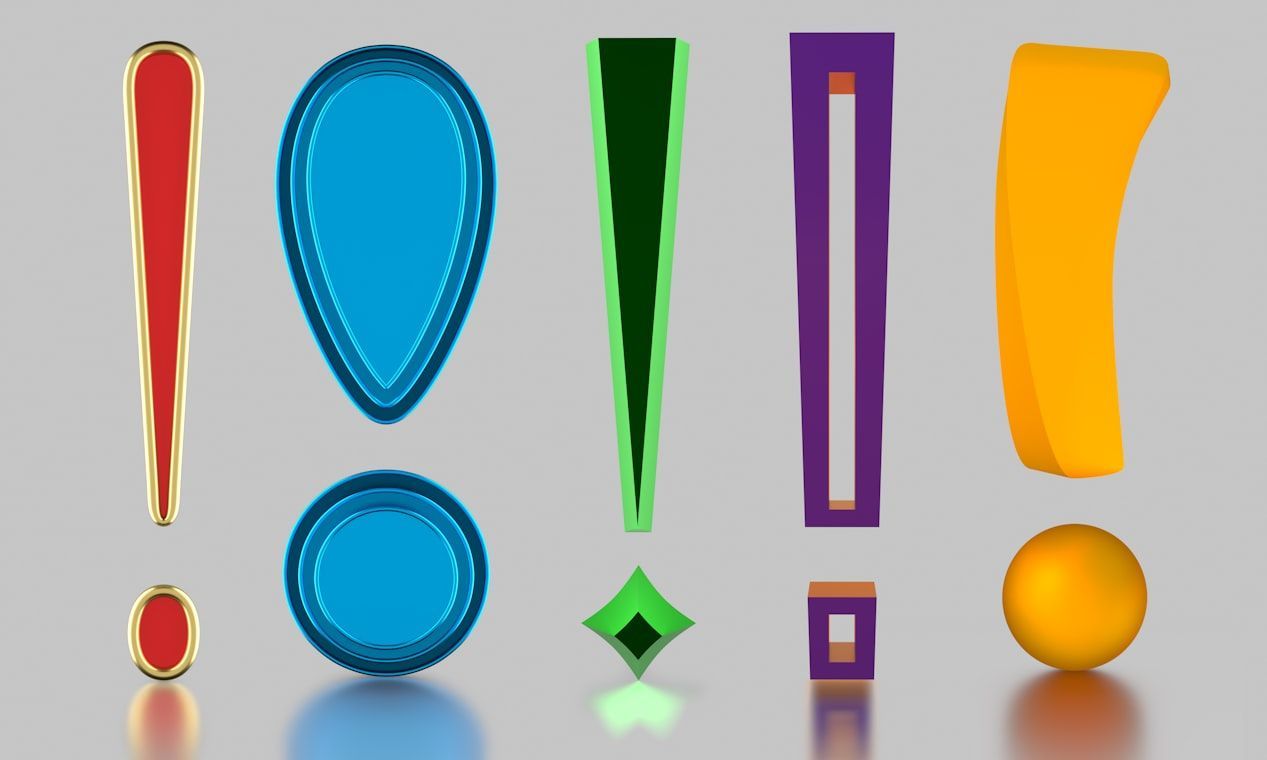
The interrobang combines a question mark and an exclamation point into one punctuation mark. It was invented in 1962 by advertising executive Martin K. Speckter.

He believed advertisements needed a cleaner way to show excited questions like "You paid how much???!!!" Although it never became standard punctuation, the symbol still exists in Unicode and modern fonts.

7

Latibulate

Image: Thomas Bormans

"Latibulate" means to hide away from society or retreat into a safe corner. It comes from the Latin latibulum, meaning "hiding place."

The word is extremely rare today, which only adds to its mysterious appeal. It is often included in collections of forgotten English words.

8

Hiraeth

Image: Billy Williams

Hiraeth is a Welsh word describing deep longing for a home, place, or time that may never truly return. It goes beyond ordinary nostalgia or homesickness.

Many writers describe hiraeth as mourning something lost, imagined, or impossible to recover fully. Among them, J.L. Borges said, "One does not miss places, but the moments spent in them."

9

Tmesis

Image: Hakim Menikh

Tmesis happens when a word or phrase is split apart, and another word is inserted in the middle. English examples include "abso-bloody-lutely" and "fan-freaking-tastic."

The term comes from a Greek word meaning "cutting." Ancient Greek and Latin poets used tmesis long before modern English speakers turned it into a playful part of casual conversation.

10

Apricity

Image: Cristina Gottardi

Apricity means the warmth of the sun during winter. The word entered English in the 1600s and comes from the Latin apricus, meaning "warmed by the sun."

Although it disappeared from common speech for centuries, apricity can sometimes be found in specific texts, since few terms describe such a precise seasonal feeling so well.

11

Clinomania

Image: Tom Hills

Clinomania refers to an overwhelming desire to stay in bed. The name combines Greek roots linked to beds and obsession, giving it a more intense meaning than simple tiredness.

The word is sometimes confused with dysania, but clinomania suggests a stronger emotional urge to remain under the covers.

12

Lagom

Image: Tracey Parish

Lagom is a Swedish word meaning "just the right amount," not too much nor too little. It reflects a broader Scandinavian philosophy centered on balance and moderation.

The term became internationally popular during the 2010s alongside Nordic lifestyle trends like hygge.


From cave paintings to touch screens

Where is the @ sign called "cinnamon bun"? Decoding typographic symbols


Published on June 27, 2026


Image: Foundry

Symbols are everywhere—from ancient manuscripts to Instagram captions. Elegant, cryptic, or quirky, certain typographic characters have communicated their meanings across mediums for centuries. The @ symbol, for example, appeared in merchant notes long before its use in email. And the asterisk has been catching eyes since ancient Greek scholars marked corrections with "little stars." In this article, we dive into the origins of these everyday symbols—you may never look at a question mark the same way again!

1

α (Alpha)

Image: Masood Aslami

We’ll start at the very beginning. Alpha, or α, is the first letter of the Greek alphabet, represented by a character similar to our lowercase "a." It traces back to the Phoenician letter aleph, which meant "ox." It was expressed with a shape that resembled the animal’s head: 𐤀.

So yes, we could say that our letter "A" is distantly derived from a drawing of a head. Because of its position at the start of the alphabet, the term alpha often refers to the first in a series—alpha particles, alpha software, and even alpha wolves are examples. It’s associated with leadership, hierarchy, and beginnings.

2

π (Pi)

Image: Taso Katsionis

We know that pi (π) represents the ratio between the circumference and diameter of a circle, which is roughly 3.14. Because of this, Pi Day is celebrated on March 14th (3/14), often accompanied by mathematical discussions and, well, pies. But what’s the origin of the "T"-like symbol?

Simply put, π is the lowercase letter "p" in the Greek alphabet. In the 18th century, Welsh mathematician William Jones adopted it in place of the word perimeter, since it’s the first letter of that word in Greek (περίμετρος). Since then, the symbol has been used to represent the mathematical constant we know today.

3

@ (At)

Image: Covi

The "at" sign (@) has a wide array of names around the world. Some of them refer to its curious shape: in Italy, it’s called chiocciola (snail), and in Sweden, kanelbulle (cinnamon bun). Although we now see it daily in email addresses and on social media, its earliest documented use dates back to the 16th century, when merchants and scribes used it to mean "at the rate of" or "each"—for example: "5 apples @ $2."

In the 1970s, however, an American scientist used it to send the first email. The symbol came in handy for separating the user’s name from the machine or server name. Five decades later, not a day goes by without millions of people hitting that key to use the symbol.

4

& (Ampersand)

Image: Kaboompics.com

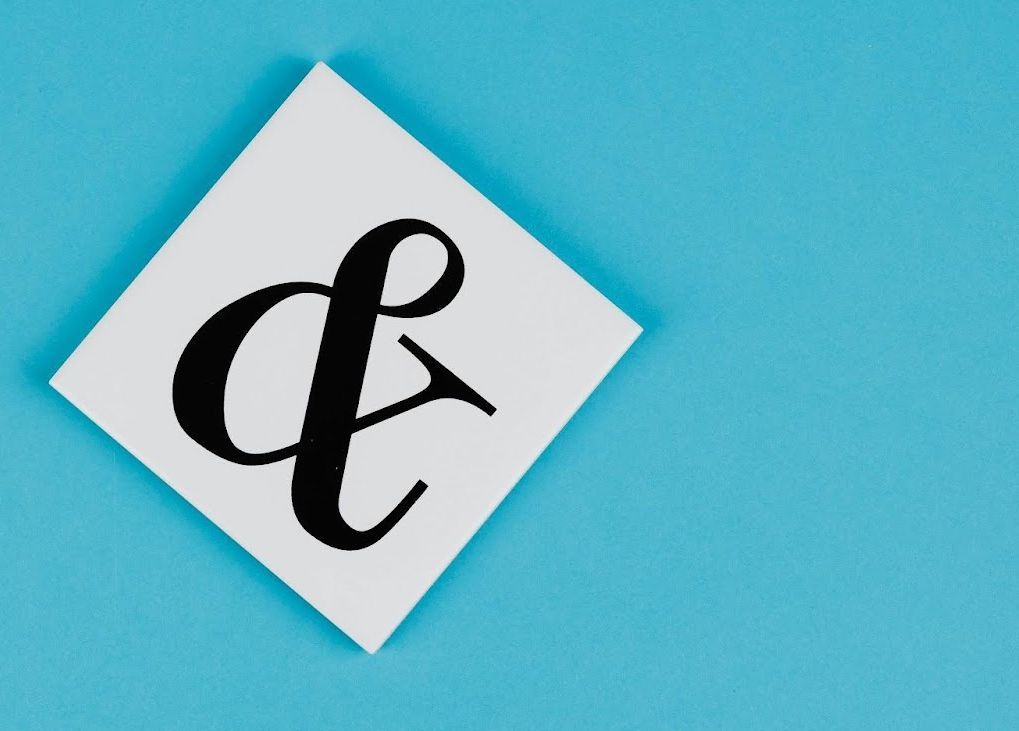
We see it in titles (Law & Order), in company names (Ben & Jerry’s), and even in abbreviations (R&B). The ampersand symbol (&) is considered one of the oldest symbols still in regular use today. It originated as a ligature—a combination of the Latin letters E and T from the word et ("and").

In 1st-century Roman cursive, scribes began merging e and t for quicker writing; the "&" shape evolved over time, becoming more stylized during the Middle Ages. The name ampersand emerged in the 1800s, when, in early grammar schools, children reciting the alphabet would conclude with "&" (then considered the 27th letter) by saying: "and per se and" (meaning "and, by itself, means ‘and’"). Over time, this phrase slurred into ampersand.

5

# (Octothorpe)

Image: Image Hunter

Some call it the "hash," the number sign, or the pound sign. Today, many know it as the "hashtag," owing to its use as a tagging device on social media. Its formal name, however, is the "octothorpe."

The octothorpe may have evolved from the Roman shorthand symbol ℔, which meant "pound in weight." Over time, it gained horizontal strokes, transforming into the # shape we recognize today. Since the 1960s, many people have known it as the "#" key on telephone keypads. In 2007, Twitter product designers adopted the symbol to group conversations—an idea that worked so well it soon spread across most social media platforms.

6

? (Question mark)

Image: Leeloo The First

In typographic terms, it’s called an "interrogation point." It marks a simple, direct question when placed at the end of a sentence, but we’ve also come to associate it with playful surprises or enigmas—like mystery boxes in games. But who decided that the dotted curl would stand for questions, though?

The question mark evolved from the Latin word quaestio ("question"). Early scribes abbreviated quaestio as "qo," placing the "o" above the "q." Over time, the "q" curved downward, and the "o" became the dot—forming the "?" we know today. By the 13th century, the modern question mark shape was widely adopted by European scholars. It became a standard punctuation mark with the rise of printing during the Renaissance.

7

! (Exclamation mark)

Image: Deden Dicky Ramdhani

So, what about the punctuation mark for exclamation? The exclamation mark has origins not too different from the question mark. In Latin, the word io (an exclamation of joy or triumph) was written with the "i" above the "o." Over time, scribes stylized this into "!", with the "i" becoming the vertical line and the "o" turning into the dot.

Still, it wasn’t until the 15th century that it became a standard symbol in writing. Before that, people relied on word choice or context to convey emphasis. Even today, some writers choose to avoid it. Style guides like The Chicago Manual of Style recommend using exclamation marks sparingly, arguing that "good writing" shouldn’t need them.

8

% (Percentage sign)

Image: Kaboompics.com

The percentage sign, used to express a fraction out of a hundred, is another example of a symbol that evolved over the centuries into a scribble in itself. In Latin, per centum was used often, meaning "per hundred." When written down in early manuscripts, it was abbreviated as "pc" or "p100." Over time, the "p" disappeared, and the "100" was transformed into the two dots we recognize today.

Did you know that there is a similar sign meaning "per thousand"? The symbol "‰" (per mille) is a lesser-known cousin of the percentage sign and is still used in scientific and financial contexts.

9

(Asterisk)

Image: Kelly Sikkema

The "asterisk," as we know it today, was already drawn in cave paintings. Simple as it is, the figure must have always been compelling. The first time it was used to mark corrections or omissions in texts was by an early Greek scholar. They called this sign asteriskos, meaning "little star."

As early as the Middle Ages, it began being used around words or sentences to imply emphasis—similar to how we use it today in digital texts. In plain-text formats, we use the "" symbol to make specific words or letters appear bold.

10

$ (Dollar sign)

Image: Polina Tankilevitch

The crossed-out "S" represents currency in the United States and many other countries, including Canada and Australia. In fact, the dollar sign originated from the symbol used in business correspondence to refer to the Spanish peso in the 18th century, also known in British America as "pieces of eight."

The peso was abbreviated as "ps" or "P$," representing "peso" and "silver." Over time, the "P" evolved, and scribes began merging it with the "S" into a single character. This stylization eventually led to the familiar "$," with one or two lines crossing the capital "S." The dollar sign became widely adopted in the United States after the country's independence.

Looking for an extra scoop of literary fun?

Learn more with our Word of the day

facilitate

/fəˈsɪləˌteɪt/