What makes a wraith different from a standard ghost?


Published on November 18, 2026

Image: Avdeyukphoto

Every October, millions of people carve pumpkins, wear scary costumes, and tell spooky stories. But while you might be familiar with the creatures that prey on the night, have you ever stopped to think about where their names actually come from? The language of spooky season is a fascinating mix of etymologies spanning Old English, Gaelic, Latin, and Arabic. Here is the true history behind 10 classic Halloween words.

1

Haunt

Image: Darkmoon_Art

If you step into a haunted house, you expect floating spirits. But for centuries, the verb haunt had nothing to do with ghosts. From the Old French word hanter, it originally meant "to visit frequently" or "to seek the company of someone."

By the 1500s, people began using it to describe an unsettling thought or memory. It was only after people started connecting those mental images to spirits that haunt officially took on its ghostly definition. Interestingly, the noun form still keeps its benign origin when you talk about a place you go often, as in "one of my favorite old haunts".

2

Ghost

Image: Erik Mclean

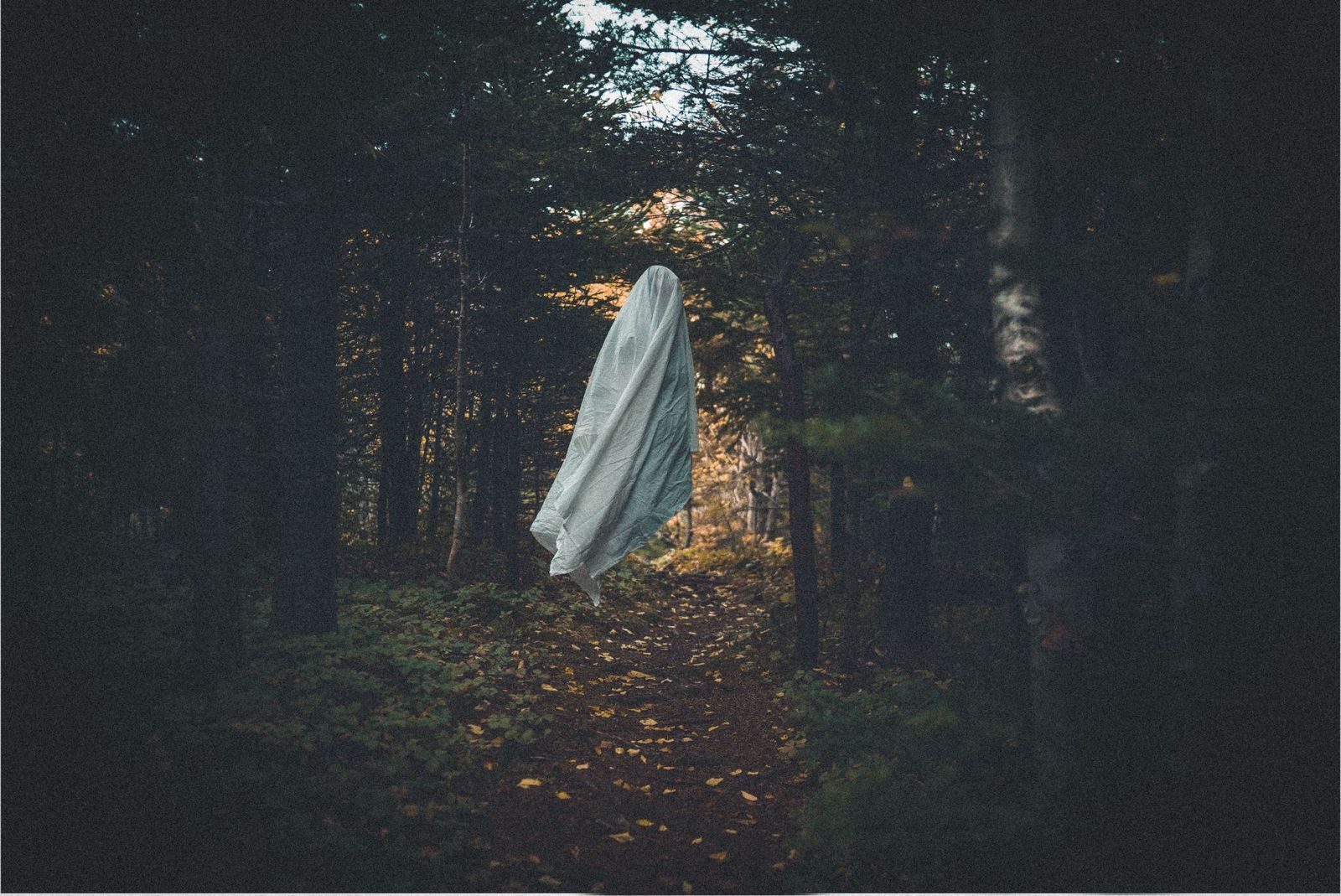
As one of the oldest words in the English language, ghost goes back over a thousand years to the Old English word gāst. Before it meant a floating white sheet in a haunted house, it simply stood for "vital spark," "breath," or "the seat of intelligence."

It referred to the living soul inside a human body, a meaning that still survives today in the phrase "to give up the ghost" (meaning to die). Over time, folklore pushed the word toward its modern meaning: a soul that has detached from its physical body and stuck around to haunt the living.

3

Vampire

Image: FOTOKITA

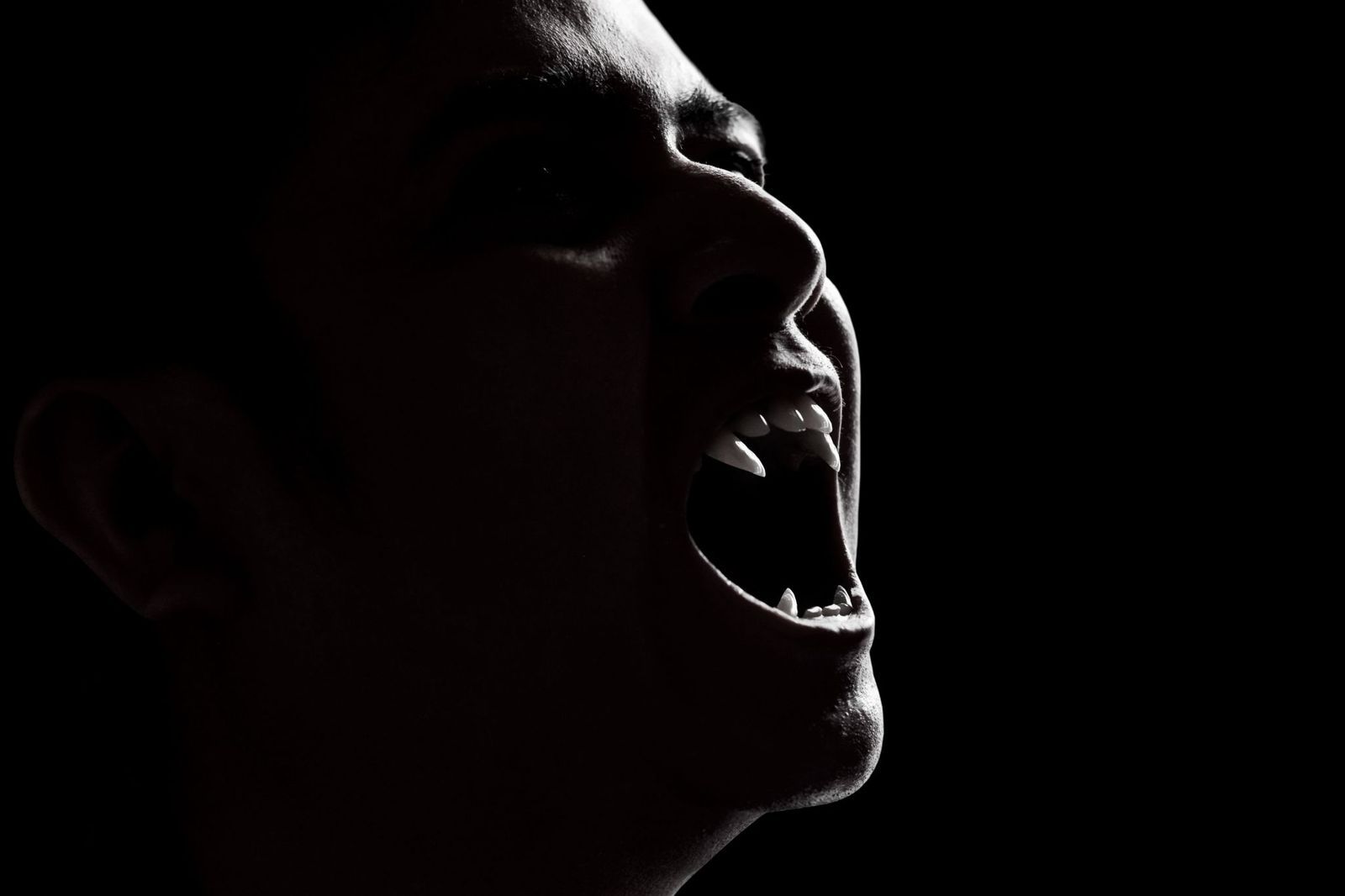
Blood-drinking creatures appear in ancient mythology all over the world, but the word vampire itself is surprisingly modern in the English language. It entered English in the early 1700s, imported from the Serbian word vampir (via German and French).

Eastern European folklore had lots of tales of undead corpses rising from their graves to feed on the living before sunrise. Once the word entered Western Europe, it came to describe predatory humans and bloodsucking bats.

4

Banshee

Image: Creativa Images

The word banshee comes from the Gaelic phrase bean sídhe, which translates to "woman of fairyland." But despite the romantic fairy roots, there’s nothing nice about this creature.

In Irish and Scottish folklore, a banshee is a female spirit whose terrifying wailing outside a house is a sign of an imminent death in the family. Today, most people know the word through the popular idiom "screaming like a banshee."

5

Goblin

Image: Internet Archive Book Images, No restrictions, via Wikimedia Commons

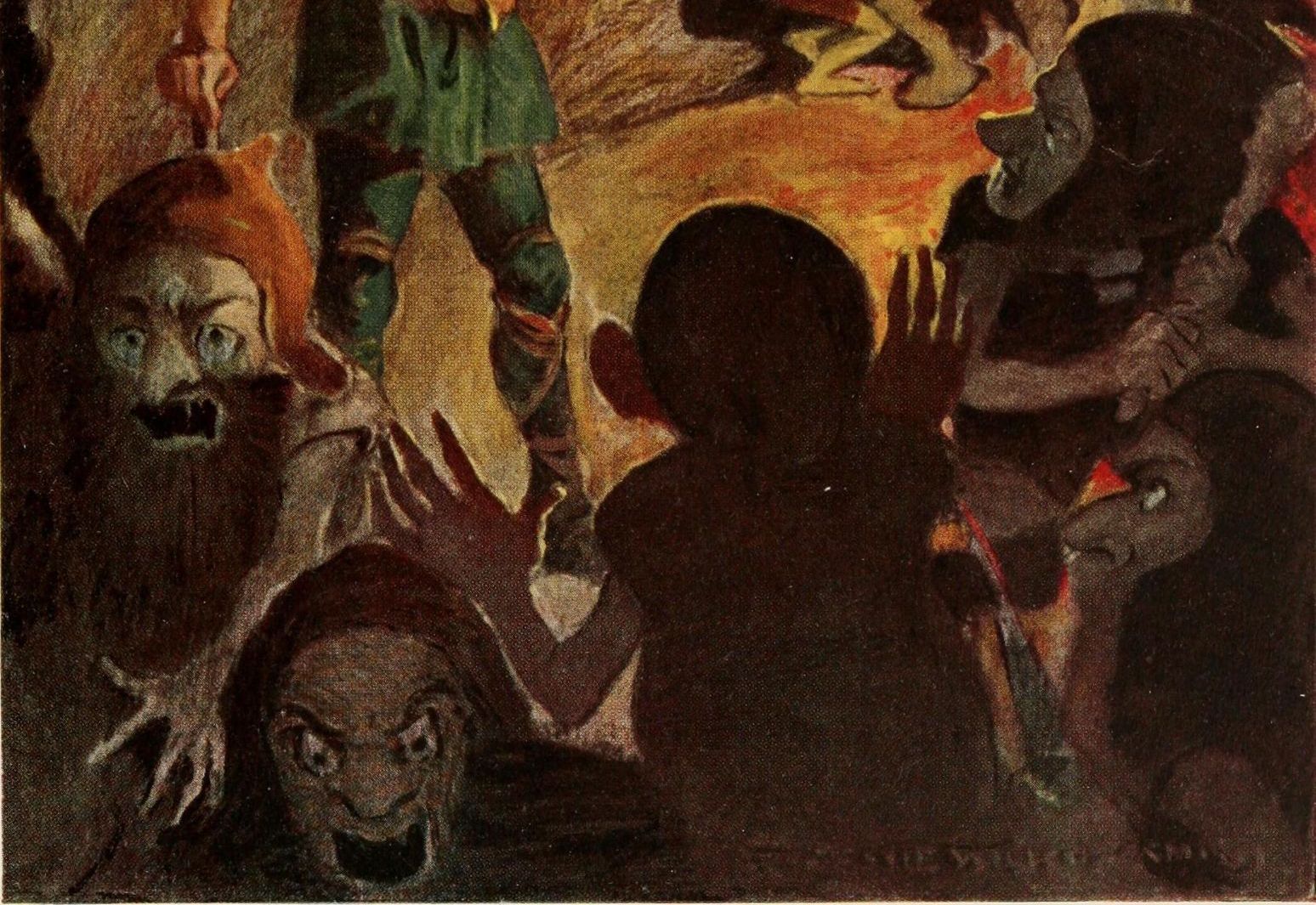
Modern pop culture often depicts goblins as weak, green fantasy minions, but the word used to have a scarier connotation. When John Milton wrote Paradise Lost in 1667, he used goblin as a terrifying alternate name for Death itself.

The word traces back through Old French to a Greek word meaning "rogue." Over time, it transformed into "an ugly or grotesque sprite," connecting the mischievous trickster to the malicious demon.

6

Wraith

Image: alexkoral

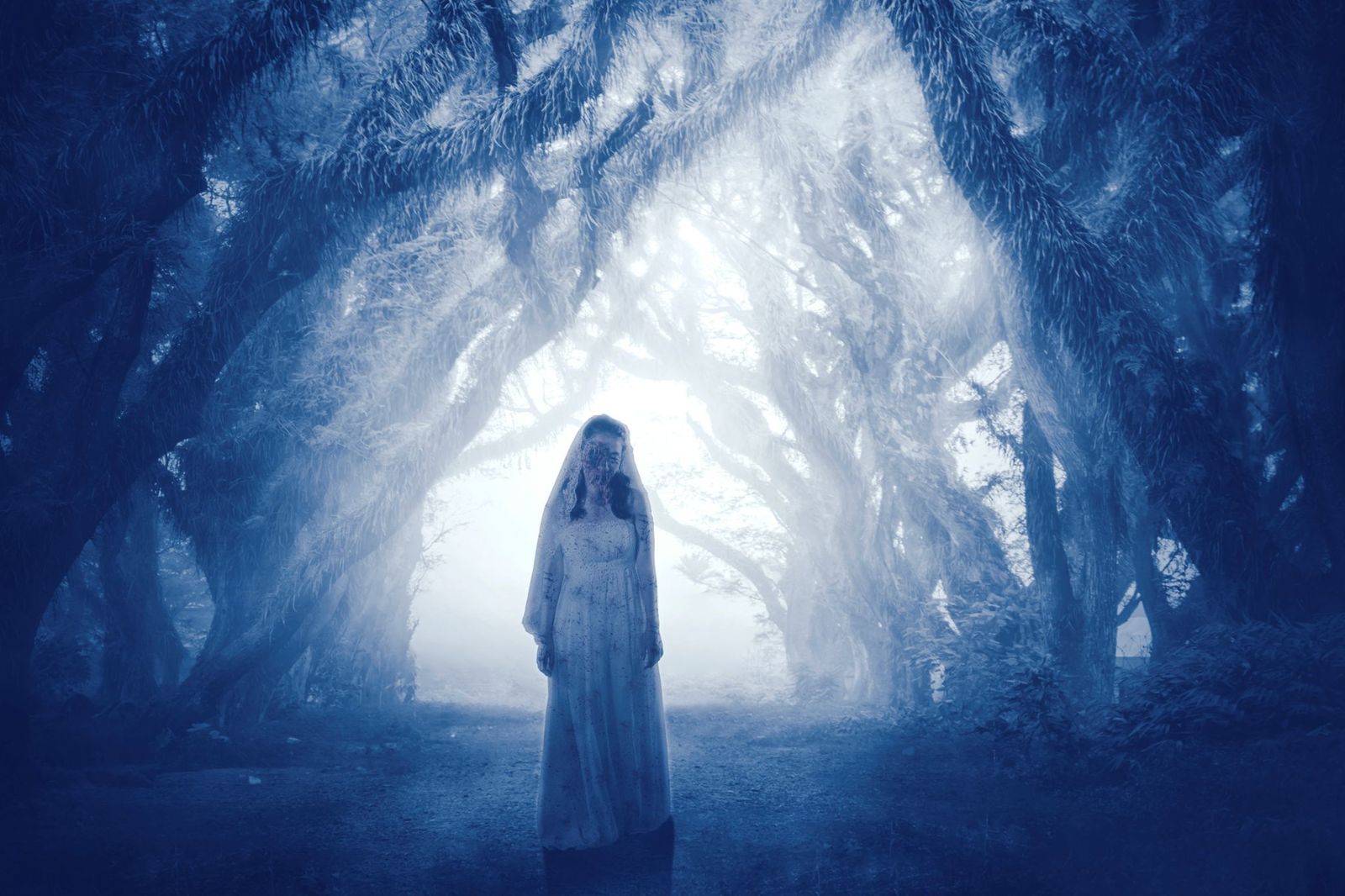
What distinguishes a wraith from a generic ghost is its specificity. Originating in Scottish folklore, a wraith was an exact double of a living person, seen right before that person’s death as a premonition of doom.

In that sense, it acted as a classic doppelgänger or "spirit double." Later on, the word expanded to mean any pale, shadowy apparition or the ghost of a dead person returning after a long absence.

7

Ghoul

Image: holwichaikawee

At first glance, ghoul sounds like it’s related to Old English words like ghost or ghastly. But that gh- spelling is misleading. Ghoul was actually borrowed from the Arabic word ghūl in the 1700s.

Derived from a verb meaning "to seize," the original creature was a terrifying desert demon known for robbing graves and devouring human flesh. The term was introduced to Western readers through 18th-century French translations of One Thousand and One Nights.

8

Specter

Image: Charles Parker

Derived from the French spectre and the Latin spectrum (meaning "an appearance" or "something seen"), a specter is nothing more than a ghost.

The Latin root verb specere means "to look," which makes specter a direct cousin to words like inspect, spectacle, and conspicuous. While it originally meant a visible disembodied spirit, it eventually expanded to imaginary, scary threats that haunt our minds, like the "specter of failure."

9

Bogeyman

Image: Motortion Films

The ultimate nightmare, the boogeyman has been used by parents for generations to trick kids into behaving. The word traces back to the Middle English term boogie (or boggart), which referred to a frightening goblin, terror, or bug.

It shares a root with words like bogy, bugbear, and even bugaboo. Across different cultures, the bogeyman takes on whatever shape a child fears most, making it one of the most enduring monster words in history.

10

Macabre

Image: Emvat Mosakovskis / Shutterstock.com

Whether you’re describing a horror film or a creepy graveyard, macabre is the go-to word for anything related to death. The word came into English from the Old French phrase Danse Macabré (the "Dance of Death"), a medieval artistic genre depicting skeletons leading people from all walks of life to the grave.

Etymologists believe Macabré was tied to the Biblical Maccabees or medieval miracle plays, but over the centuries, it evolved into an adjective for anything dark, morbid, or gruesome.


Vigilantes and rogues

Good or bad? Discover these 10 antiheroes!


Published on November 18, 2026


For every knight in shining armor, there’s always an antihero hiding in the shadows: These characters are definitively do-gooders, but they usually lean towards a grayer sense of morality. Think about it: While Superman is brightly dressed, friendly, and warm, Batman works at night, fighting the underbelly with his very once sense of ruthless justice. In that regard, we have selected 10 of the most intimidating, dangerous, and morally ambiguous characters from films, shows, and comic books. These fighters of justice might sometimes be on the wrong side of the law, but that doesn’t mean we can’t enjoy their adventures. Enjoy!

1

Wolverine

Image: Erik Mclean

We’ll start with someone who many believe to be the quintessential comic-book antihero. Wolverine is the code name of Logan, a mutant superhero from the world of Marvel Comics. His mutant powers give him the ability to heal from wounds. Not only that, thanks to his healing his body was infused with Adamantium, a fictional metal known for its indestructibility.

One of the key aspects of Logan is his wild and animalistic personality: Troubled by amnesia, Logan’s past is a mystery that keeps him at arm's length from his own humanity. This makes him prone to entering a feral and berserker state which makes him extremely dangerous to his enemies.

2

The Man with No Name

Image: Priscilla Du Preez 🇨🇦

The Wild West is the perfect environment for antiheroes: A place where morality and societal norms were often ignored. Sergio Leone’s "Dollars Trilogy" introduced the world to one of the most iconic antiheroes produced by the Western genre: The Man with No Name, played by Clint Eastwood in all 3 films.

Sometimes known as "Blondie" or "Joe", Eastwood’s character is instantly recognizable by 3 characteristics: His poncho, his fondness for cigarillos, and the fact that he seldom speaks. Not only that, but this man is an expert gunslinger, who should be feared by anyone that dares to stand in his path.

3

Batman

Image: Sajjad Ahmadi

Gotham City’s masked protector is known by many names, like the Dark Knight or the Caped Crusader. However, when Bruce Wayne chose the name he would take for his fight against crime, he adopted the symbol of the animal he feared the most, in the hope that he would inspire the same fear in criminals. And with that, Batman was born.

Batman’s origin story has become a classic at this point: Billionaire Bruce Wayne becomes determined to rid his city of evil after witnessing his parent's murder when he was a young boy. For years, Bruce trained endlessly in order to reach peak physical and mental performance and fight crime from the shadows.

4

Snake Plissken

Image: Shai Pal

John Carpenter is known as an absolute master of horror, but that doesn’t mean he can make an incredible action film. Case in point: The amazing 1981 science-fiction film Escape from New York, centered around the roguish Snake Plissken, portrayed by Kurt Russell.

In this dystopian film, Manhattan has become a massive maximum-security prison. After the President of the United States is kidnapped, former war hero turned criminal Snake Plissken is tasked with rescuing the Commander-in-Chief, for which he will be granted his freedom.

5

Travis Bickle

Image: the blowup

Martin Scorsese’s 1976 film Taxi Driver introduced the world to the amazing talent of Robert DeNiro, who played Travis Bickle, the main character of this film. Travis is a Vietnam war veteran troubled with insomnia, who takes a job as a late-night taxi driver to make a living.

DeNiro’s superb performance makes Travis almost seem like a real person: His troubled mind and paranoia paint him as the tortured human being he is. Throughout the film, Travis often decides to walk his own path of morality, turning his back on the society that seemingly abandoned him.

6

Dirty Harry

Image: Nejc Soklič

It stands to reason that Clint Eastwood, a man known for his ability to play tough characters, made it twice to this list. The 1971 film Dirty Harry follows Detective Harry Callahan and the vigilante ways he employs to catch a serial killer known as Scorpio.

What sets Dirty Harry apart is how easily he chooses to cross professional boundaries to get the bad guys: This is the exact definition of what makes an antihero. Eastwood’s wonderful performance of this tough-as-nails detective truly cemented him as a pop culture icon.

7

John Rambo

Image: Michael Waddle

Just like Travis Bickle, John Rambo is a lonely and troubled Vietnam war veteran: Rambo’s first film, based on the novel First Blood, shows him making his way to a small Washington town in order to meet a former comrade. However, after the local sheriff mistreats him and throws him in jail, Rambo becomes an unstoppable killing machine, guided by both his own moral code and his frail mental health.

After the success of First Blood in 1982, Rambo was featured in several sequels that saw him fight for freedom all around the world. Thankfully, the last two movies gave John a much-deserved home in which to grow old.

8

The Dukes of Hazzard

Image: Michael Waddle

Who says that antiheroes can’t be fun? Cousins Bo and Luke Duke are the main characters of this 70s comedy series, which shows their adventures in a small Georgia town. Thanks to "General Lee," their loyal Dodge Charger, Bo and Luke wreak havoc in their hometown, often foiling the plans of their corrupt town sheriff.

The Dukes of Hazzard was known for its action, comedy, and exhilarating narrative: Week after week, millions of Americans turned to their TVs to see what sort of troubles the "Duke Boys" had gotten themselves into.

9

Sonny Wortzik

Image: Etienne Martin

Al Pacino’s wonderful performance in the 1975 crime drama Dog Day Afternoon is truly something else: For many critics, this movie is Pacino’s greatest role, which is saying something considering that he is often regarded as one of the greatest actors of his generation.

This film follows a failed 1972 robbery led by Sonny Wortzik, a bank robber who takes the entire building hostage. Pacino, who plays Wortzik, was able to superbly portray a layer of anguish and humanity to this extremely nuanced character.

10

Citizen Kane

Image: Andres Siimon

We’ll end this article with a bit of a controversial take. Up until now, we have mostly focused on antiheroes known for their brawns, their savagery, or their fighting skills. However, a point should be made that Charles Kane, the billionaire protagonist of Orson Welles's masterpiece Citizen Kane, has many of the feats that make a good antihero.

For starters, Kane’s morality seems to be guided by one defining factor: Greed. Kane is a character who covets status, power, and wealth: The movie follows him from his early childhood through his botched political career. However, by the end of the film, Kane turns into an almost irredeemable character into someone seeking his own lost innocence, which tortures him untill his last breath.

Looking for an extra scoop of literary fun?

Learn more with our Word of the day

honest

/ˈɑnəst/