Broadcasting terms
What's "The $64 question"? Words and expressions born on the radio
Published on November 1, 2026
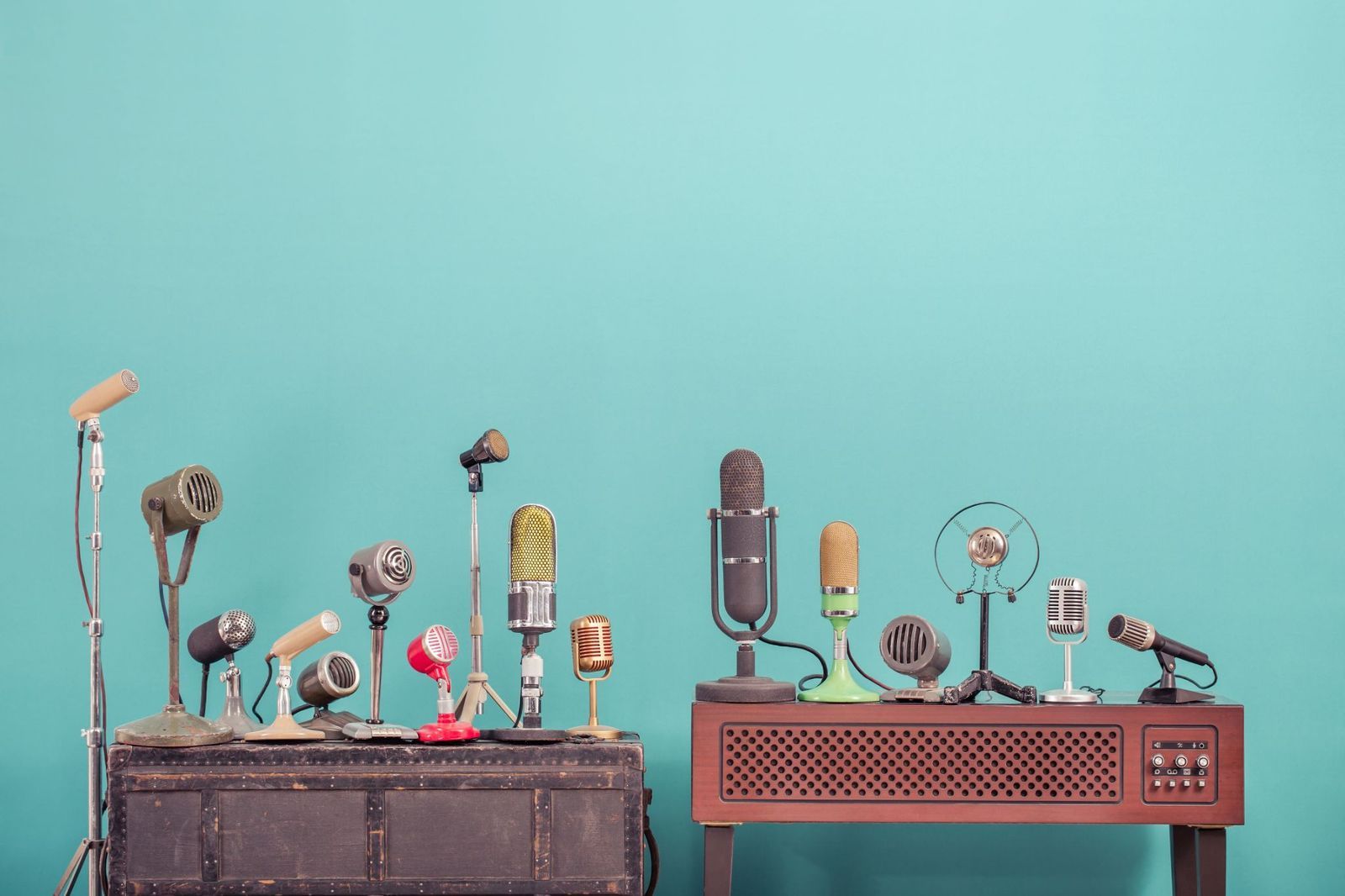
Once, families gathered around the radio, not a television set. Broadcasting the news, music, and comedy, radio shows changed how people spent their evenings, but also how they talked. Terms like "crooner," "jingle," "payola," or even whole concepts like "the $64,000 question" all originated in radio stations. Here are 10 stories of words born during the last 100 years.
"Broadcast" came from farming
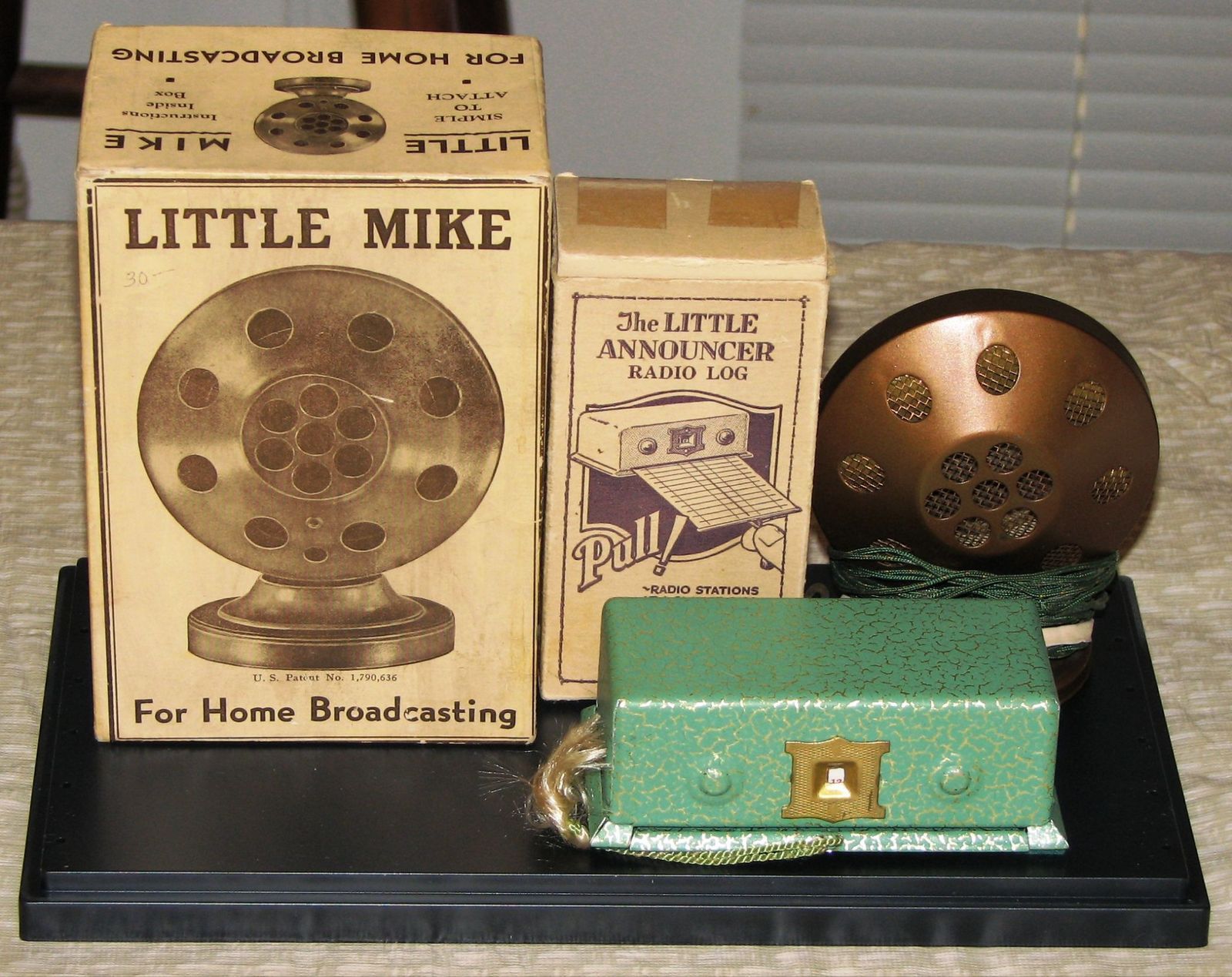
Long before anyone owned a radio, farmers were already broadcasting. The word meant "sowing seed by hand." It referred to walking across a plowed field and flinging grain in wide arcs so that it landed everywhere at once. The term first appears in print in 1767, and it’s a good metaphor for what the radio technology ended up doing.
The first documented use of the word to refer to the technology occurred in 1921; the following year, the BBC was born, incorporating it in its name, British Broadcasting Company.
"Soap operas"
Why would a melodrama about love, betrayal, and amnesia be named after laundry soap? It has to do with the sponsors. In the early 1930s, radio filled its daytime hours with 15-minute serial dramas aimed at women doing housework, and companies like Procter & Gamble, Colgate-Palmolive, and Lever Brothers paid for them and often produced them.
The "opera" part was a joke borrowed from "horse opera," slang for cheap Westerns. The genre is generally traced to Painted Dreams, which premiered on Chicago’s WGN in 1930. Its creator, Irna Phillips, pioneered the cliffhanger ending and the mood-setting organ music. She went on to create other shows like The Guiding Light (1937), which, along with the term, moved on to television.
"Disc jockey"
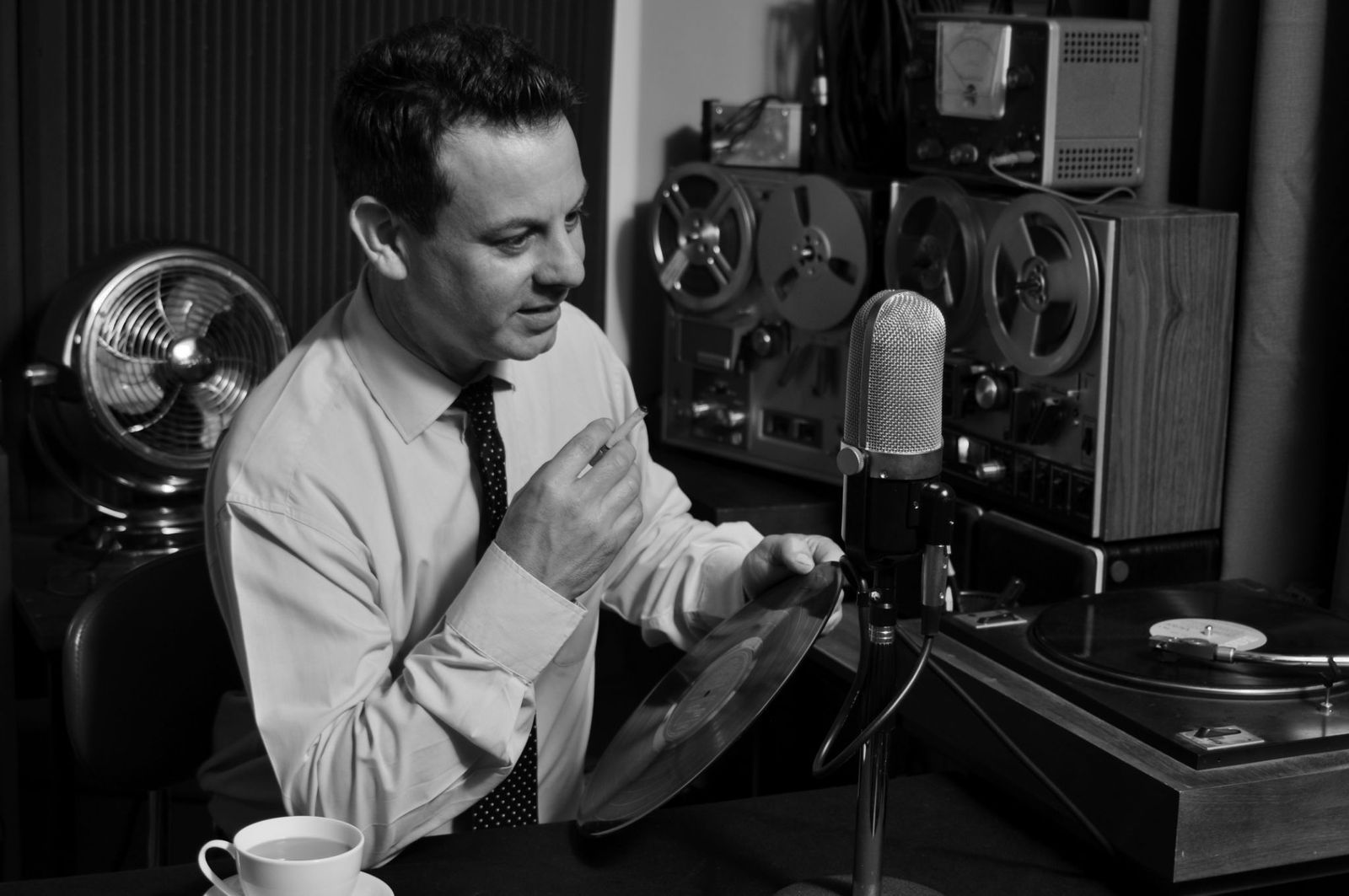
Long before we came up with the term "DJ," a disc jockey was the person who picked and played records on the air. It’s important to understand that, in radio’s early years, recordings were considered second-rate; in 1929, NBC proudly declared live broadcasts superior to anything recorded.
Then, in the 1930s, while sharing live news and waiting for relevant updates, announcers decided to play music to fill the long gaps between bulletins. In 1935, announcer Martin Block did just that, and columnist Walter Winchell allegedly joked that he was a "disc jockey": the disc was the record, the jockey the man riding it. Within a decade, every station needed someone playing the discs.
"The $64 question"
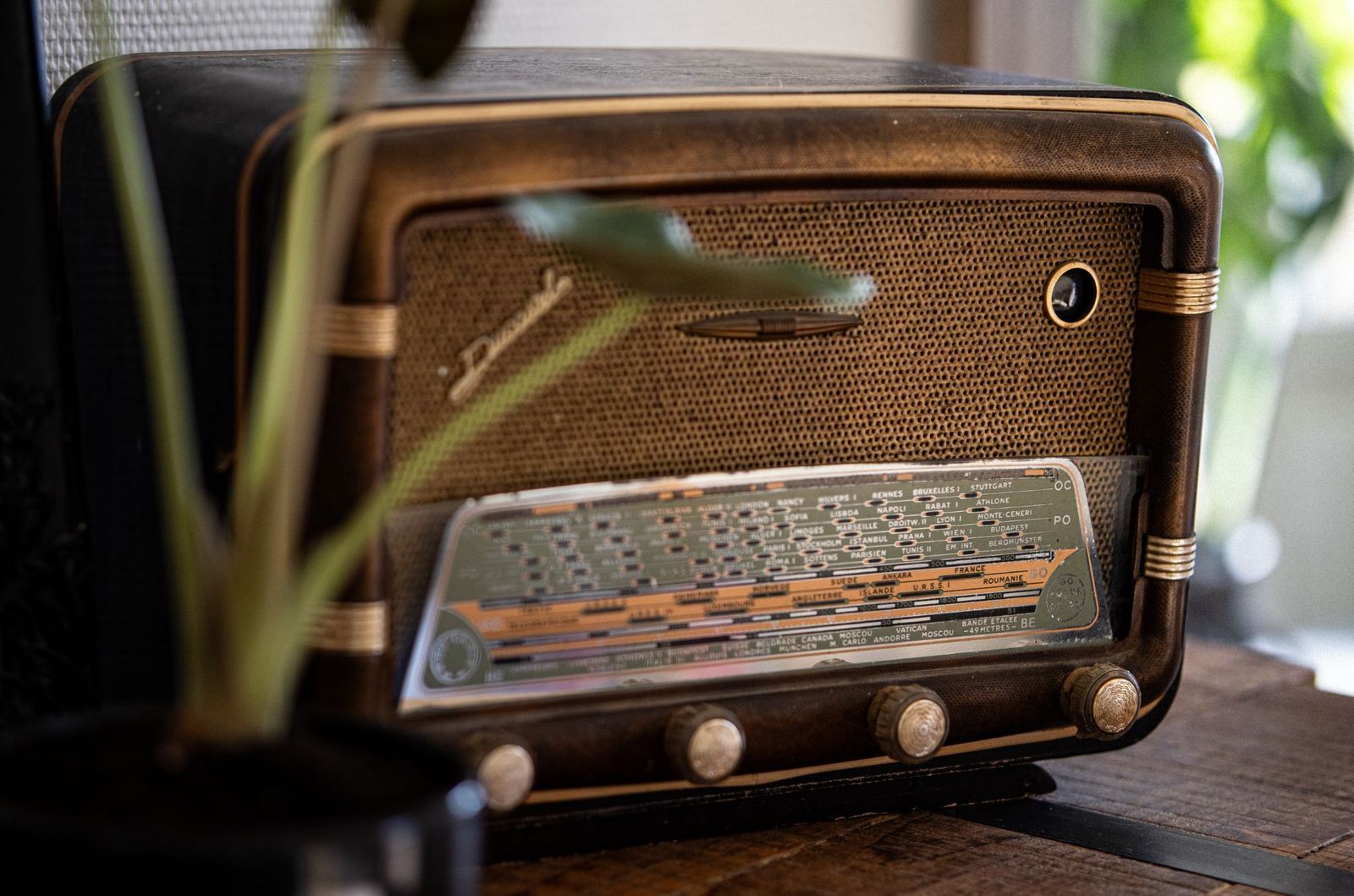
Most people remember The $64,000 Question as the 1950s TV quiz show sponsored by Revlon. But the phrase was born on radio. In April 1940, CBS launched Take It or Leave It, a show where contestants faced seven questions: the first was worth $1, and the prize doubled each time, so the last one was worth $64.
After every answer, they could pocket the money or risk it, while the studio audience shouted, "You’ll be sorry!" Garry Moore, Eddie Cantor, and Jack Paar all took turns as host. "That’s the $64 question" quickly became slang for any tough problem. Inflation eventually caught up with a more substantial prize, and it ended up as the name of the TV show.
"Stay tuned, sign off"
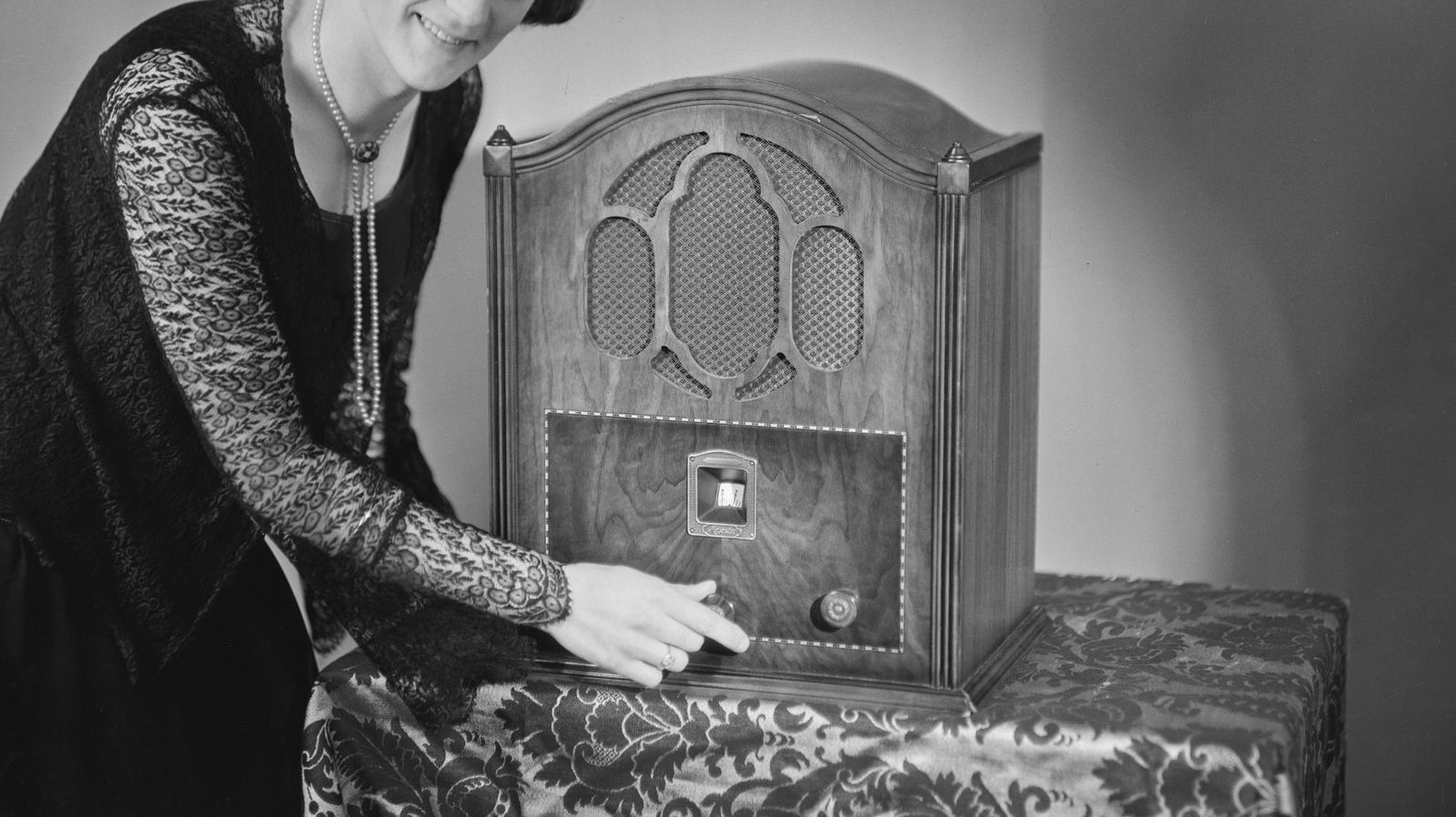
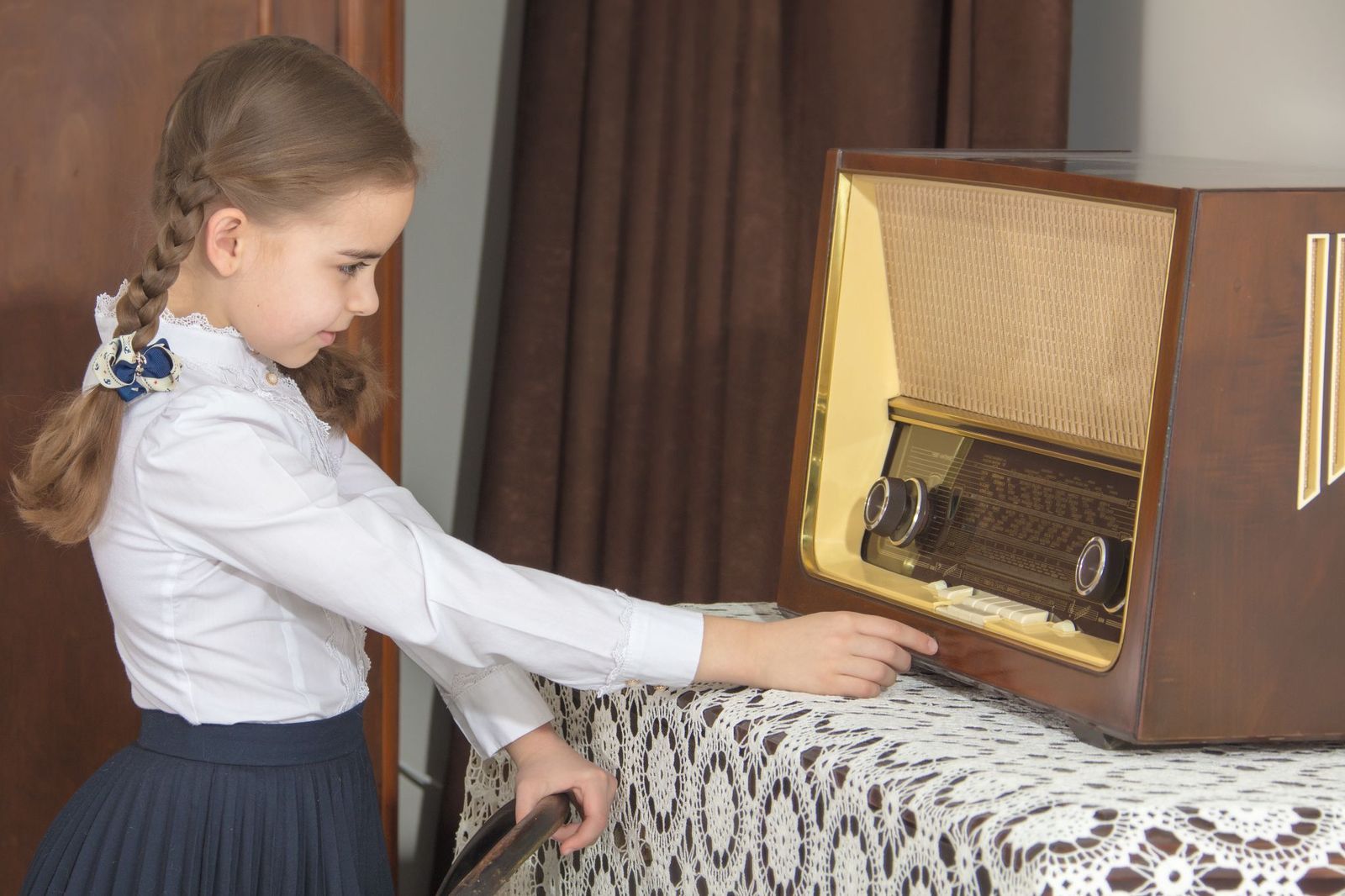
In the early 1920s, finding a station took patience and both hands. Many sets had two or three large dials, and every one had to be turned in unison to bring in a signal. No wonder announcers urged audiences to "stay tuned": if they lost the station, the fiddling had to start all over again. Single-knob tuning only became common late in the decade. "Sign off" was already around, meaning simply to stop doing something, but by 1923 radio had made it the station’s nightly goodbye.
"Jingle"
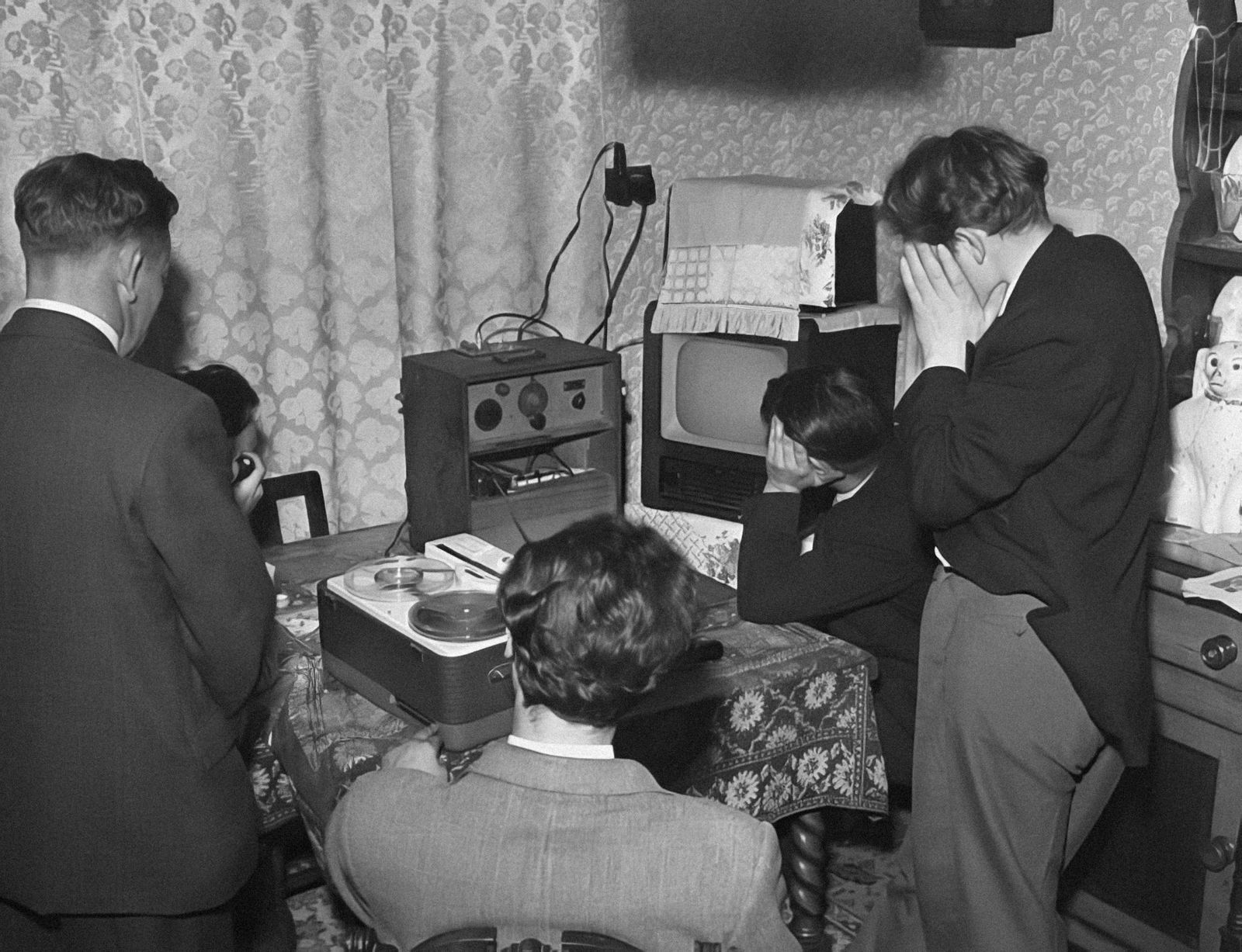
The term "jingle" itself dates to the 1300s, referring to the tinkle of small bells. Over time, the word evolved to describe short, catchy verses with repetitive rhythms and rhyming lines, like children's nursery rhymes. When catchy musical slogans hit the airwaves in the 1920s, advertisers borrowed the word.
The first jingle ever was played on Christmas Eve, 1926. In Minneapolis, four men stepped up to a microphone: a court bailiff, a grain company worker, a printer, and an undertaker. They sang a soon-to-be-famous little song that asked, "Have you tried Wheaties?" The station that played it was Washburn Crosby Company (WCCO), later General Mills. The jingle measurably increased sales in Twin Cities, where it was airing, so the company bought national airtime and hired quartets across the country to sing it. It wasn’t long before the advertising world caught on to the strategy.
"Payola"
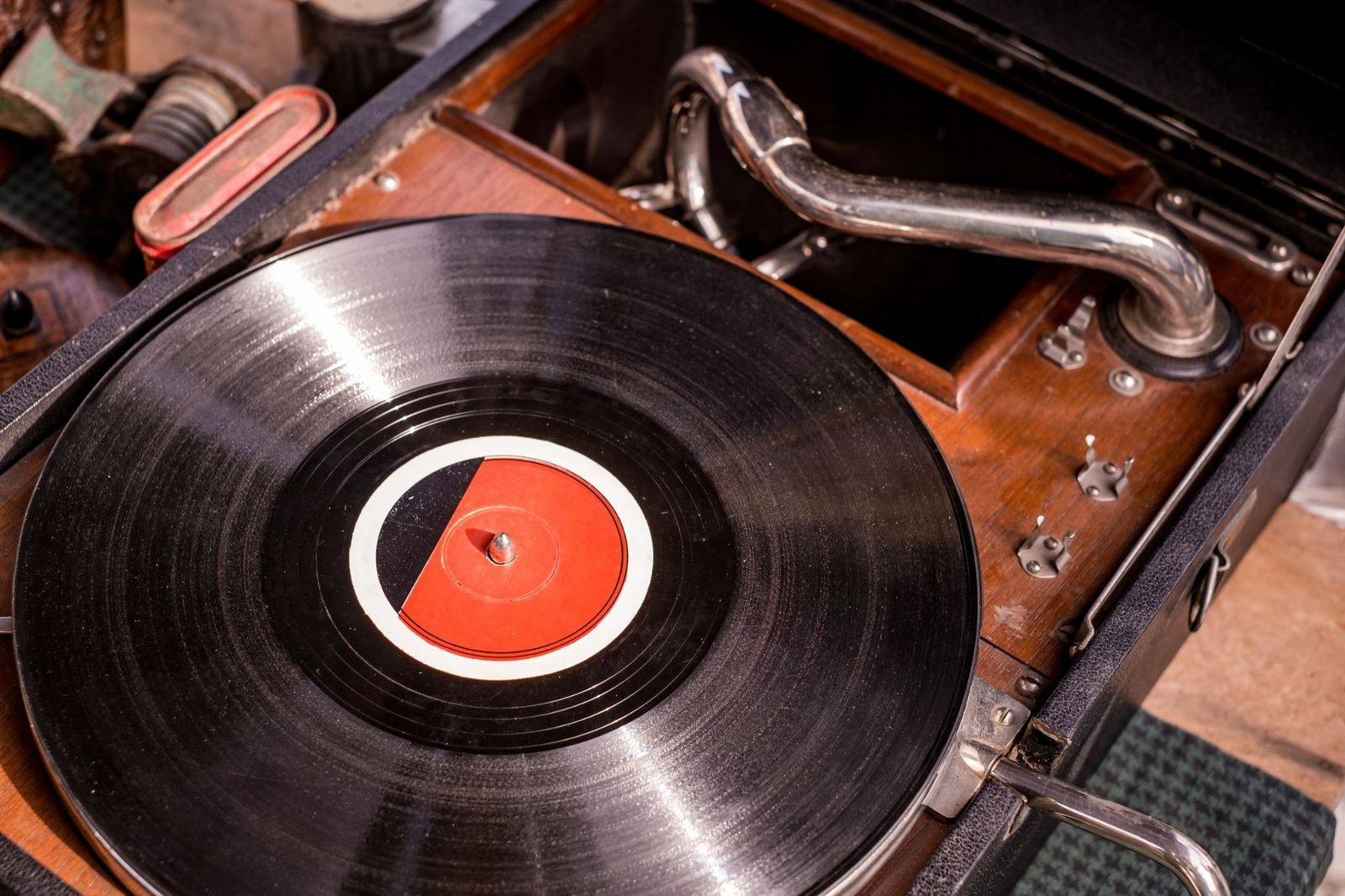
Payola is a secret payment to get a song on the air. Variety coined the term in 1938, attaching "pay" to the jaunty ending of brand names like Victrola and Pianola. When television had taken over radio’s dramas and stations had hours to fill with music, cheap singles were flooding the market. A handful of superstar disc jockeys suddenly held the power to turn an obscure track into a hit overnight.
Record labels began bribing DJs with cash, co-writing credits, and luxury gifts to guarantee airplay. Ethically, critics viewed payola as a form of consumer fraud. In November 1959, Alan Freed, the most popular DJ in the country and the man credited with popularizing "rock ’n’ roll," was fired from WABC after refusing to sign a statement that he’d never taken payola. In 1960, the US Congress made it a federal crime to accept undisclosed payola.
"Fireside chat"
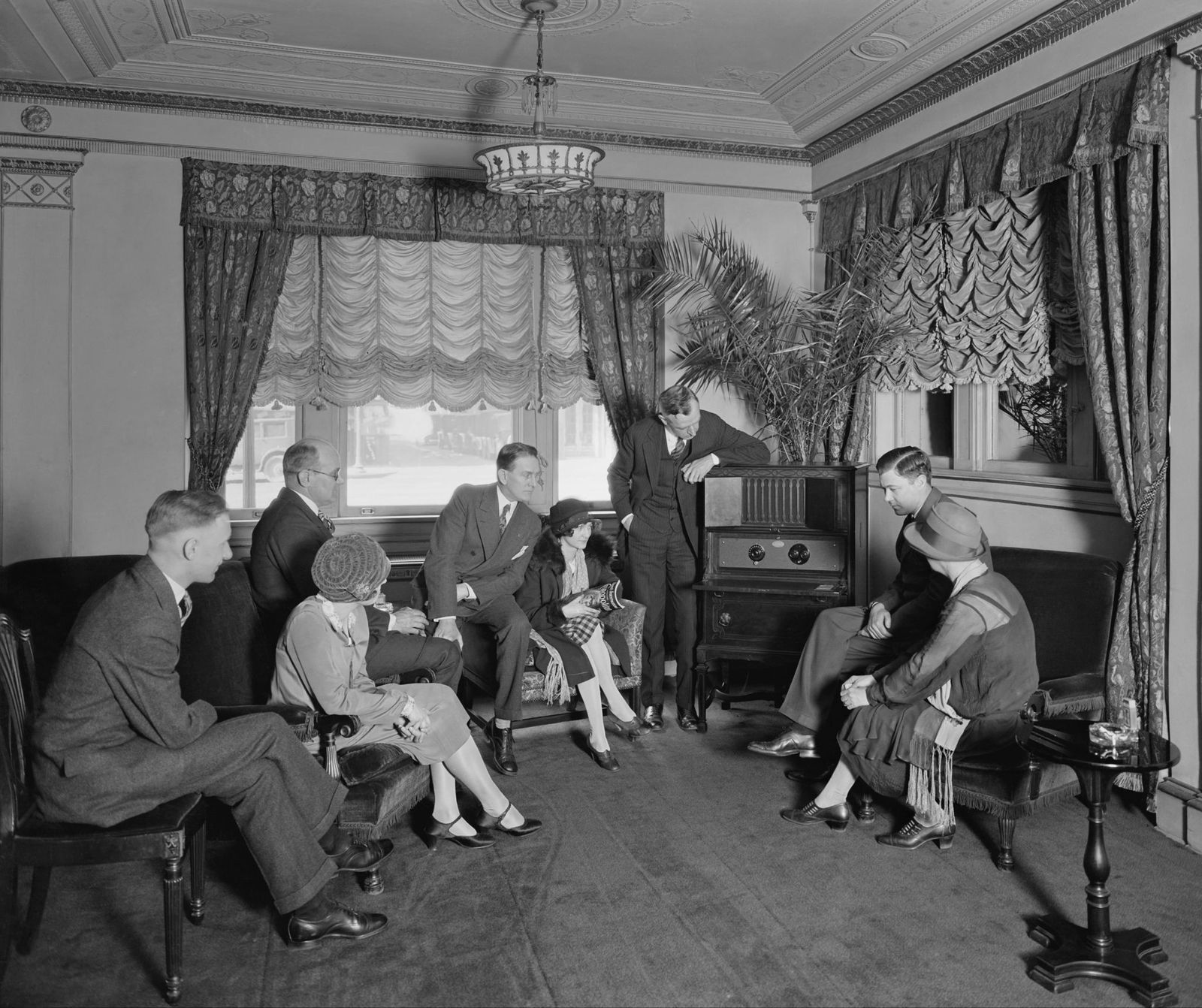
When Franklin D. Roosevelt spoke to the nation by radio, he sat at a White House desk crowded with microphones, but found a direct way into people’s living rooms. His first talk came on March 12, 1933, eight days after his inauguration and in the middle of a banking panic. He opened with "My friends" and explained, in plain language, how the banking system worked.
Before his next address, that May, CBS’s Harry Butcher called it a "fireside chat" in a press release, and the cozy name stuck. Roosevelt gave about 30 of them through 1944, speaking very slowly. Families gathered around to listen: by 1940, more than 80% of American homes owned a radio.
"Crooner"
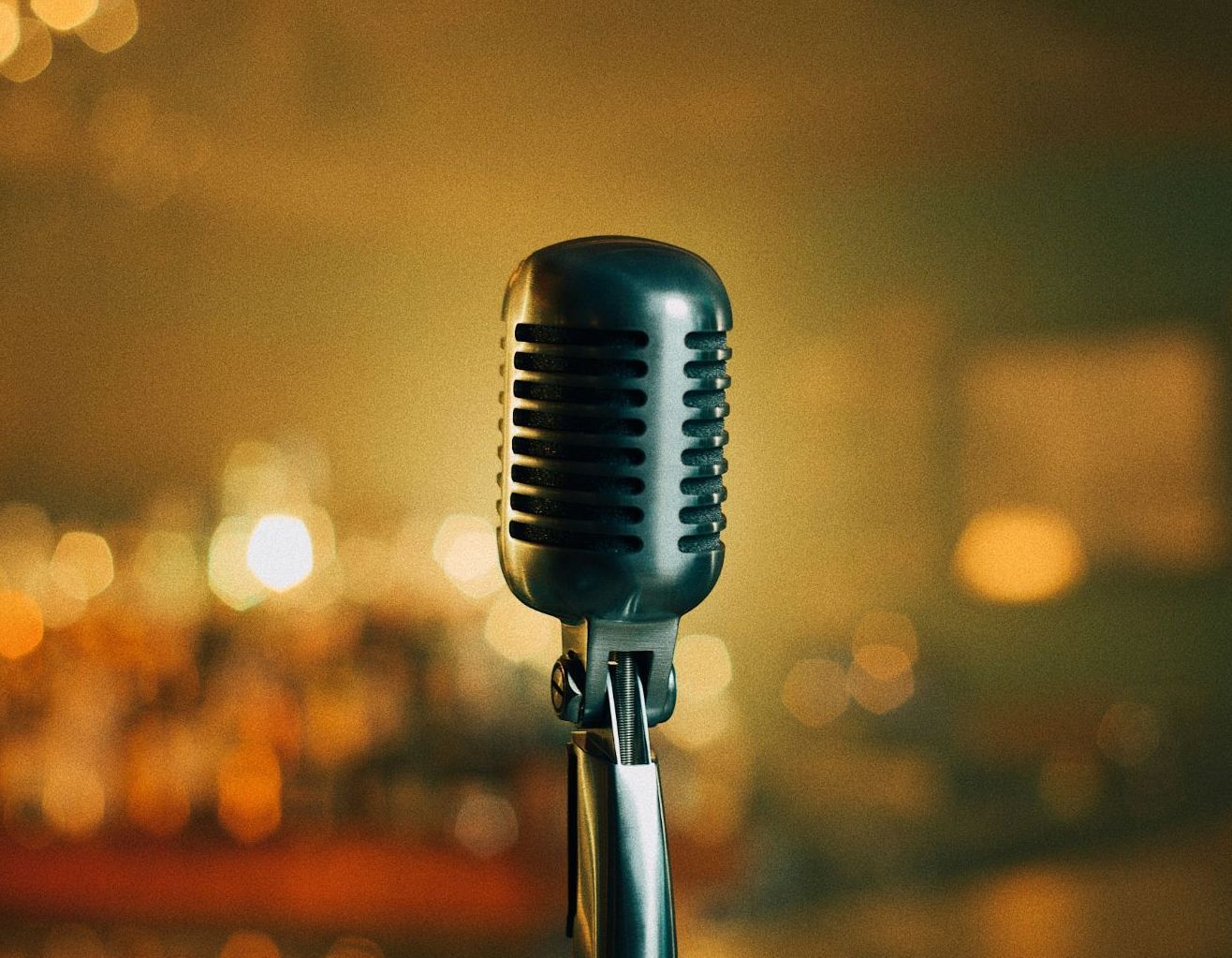
We might associate the term with velvety voices and dark suits, but "crooner" began as an insult. The old Scottish verb "croon" once meant to lament, or even to bellow like a bull. By the late 1920s, it described a soft, intimate style of singing.
This style was only made possible by the invention of the electric microphone. Before it, singers had to project their voices to the back of the theater. Rudy Vallée first crooned through a megaphone around 1930, and he is believed to have become the first major star to sing into a microphone in a ballroom. In January 1932, Boston’s Cardinal O’Connell called crooning "a degenerate form of singing," and The New York Times predicted it would vanish soon. Time proved them wrong.
"Amateur hour"
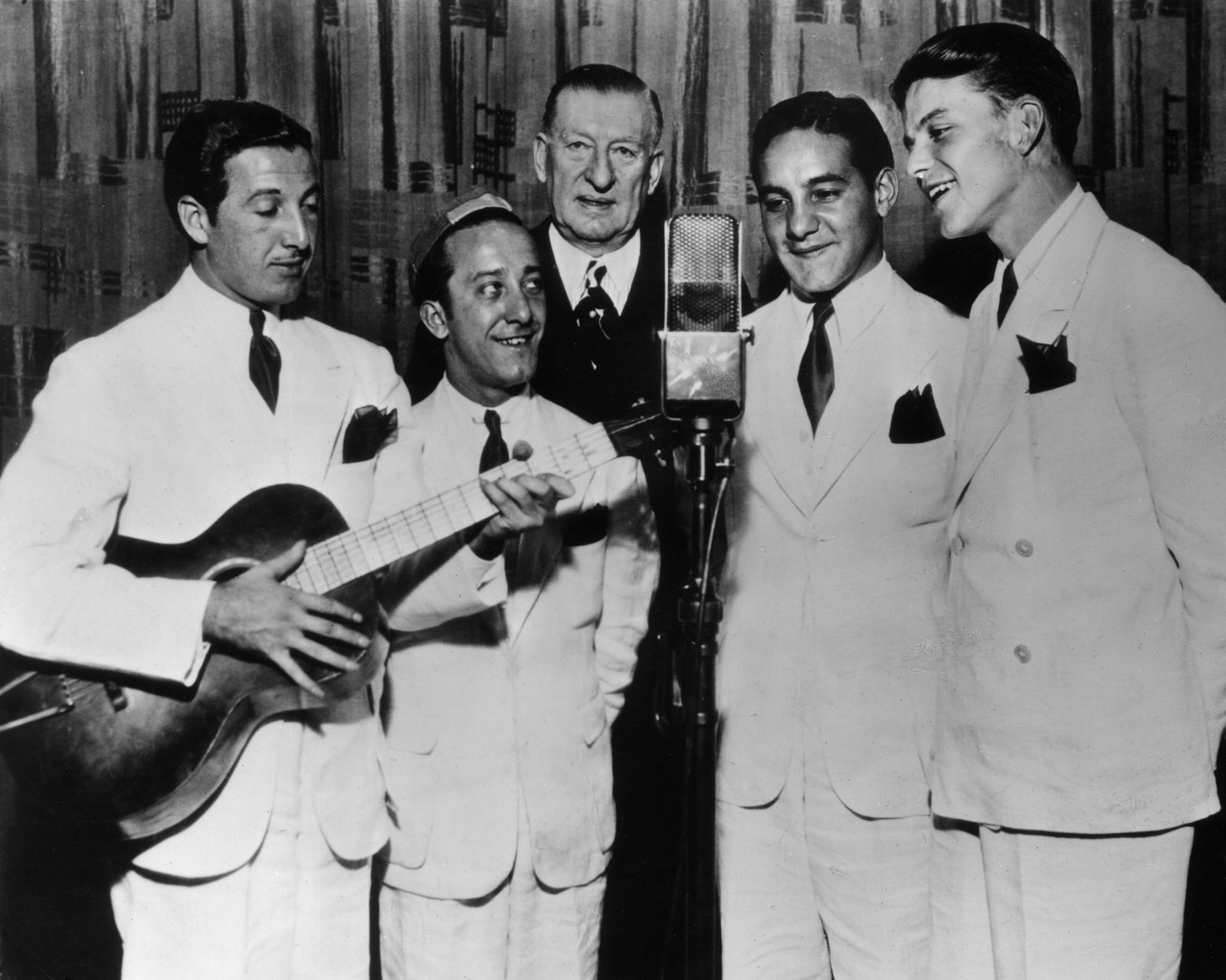
Today, calling something "amateur hour" is an insult: it mocks sloppy, unprofessional work. In the 1930s, it was the most exciting hour on the radio. Major Edward Bowes launched his talent show on New York’s WHN in 1934, in the depths of the Depression, and took it national on NBC the next year. Each episode began with Bowes spinning a "wheel of fortune" and intoning, "Round and round she goes, and where she stops nobody knows." But the show’s production team pre-screened thousands of applicants and carefully lined up the performers.
On September 8, 1935, a 19-year-old from New Jersey sang tenor in a quartet called the Hoboken Four. His name was Frank Sinatra, then still an amateur.