World traveling, at home
Why is there a Paris in Texas? Discover 12 U.S. towns with foreign names
Published on January 27, 2026
 Credit: Florian Wehde
You don’t need to leave the U.S. to take a trip around the world. All you have to do is check a map! Scattered across the country are dozens of American towns and cities named after faraway places, from Athens, Georgia, to Barcelona, New York. Did you know about these 12 cities and the origin of their names?
Birmingham, Alabama
 Credit: Tom W
Birmingham, Alabama, was founded in 1871 and named after Birmingham, England, to reflect its industrial ambitions. James R. Powell, one of the founders, had recently visited the English city and proposed the name.
Inspired by England’s iron and steel hub, the new Birmingham quickly grew and earned the nickname "The Magic City" for its rapid industrial development.
Paris, Texas
 Credit: Chris Karidis
Named after the French capital city, Paris, Texas, was officially established in 1844 and became the county seat of Lamar County before the Civil War.
The name was supposedly chosen by founder George W. Wright in a lighthearted or playful spirit, according to local lore.
Berlin, Connecticut
 Credit: Florian Wehde
Berlin, Connecticut, was formed from parts of several nearby towns. It was originally called Kensington before being renamed after Berlin, the then capital of Prussia.
The name likely reflected admiration for Frederick the Great, seen as a supporter of the American Revolution. Unlike its German namesake, the town's name is pronounced with the stress on the first syllable.
Rome, New York
 Credit: David Köhler
Rome, New York, was named after Rome, Italy, following a trend of naming towns in upstate New York after classical European cities. The area was previously called Lynchville, after its Irish settler Dominick Lynch.
The name "Rome" had already been given to the township during the "Classical Naming Period."
Madrid, Iowa
 Credit: Florian Wehde
Madrid, Iowa, was named after Madrid, Spain, but the choice was rooted in personal spite. During the third town survey in 1855, local landowner Gaston named it to irritate his Swedish in-laws and a Spanish employee.
Despite the odd origin, the name remained through subsequent surveys and was officially kept when the town was incorporated in 1883.
Athens, Georgia
 Credit: Constantinos Kollias
Athens, Georgia, was named after Athens, Greece, to reflect ideals of learning and culture. The name was chosen in 1801 by John Milledge when he purchased land for the University of Georgia.
Inspired by classical traditions, Milledge wanted the new town to symbolize intellectual pursuit, much like its ancient namesake.
Moscow, Pennsylvania
 Credit: Michael Parulava
Moscow, Pennsylvania, was settled in the 1830s, with Reverend Peter Rupert, a Lutheran minister, playing a key role in its founding. The town’s early economy centered on lumbering and agriculture.
It was named after Moscow, Russia, possibly due to Russian settlers or shared religious ties with Reverend Rupert.
Versailles, Kentucky
 Credit: Brandy Willetts
Versailles, Kentucky, was founded in 1792 on land owned by Hezekiah Briscoe. His guardian, Major Marquis Calmes, named the town after Versailles, France.
The name honored General Lafayette, a family friend and Revolutionary War hero with strong ties to the French city. It was chosen as a personal tribute and reflected French influence.
Oxford, Mississippi
 Credit: Ben Seymour
Oxford, Mississippi, was founded in 1837 and named after Oxford, England, to attract a university. The founders hoped to establish the town as a center of learning.
Their plan succeeded when Mississippi chose Oxford as the site for its first state university in 1841. The university opened in 1848, fulfilling the city’s academic vision.
Frankfort, Illinois
 Credit: Lāsma Artmane
Frankfort, Illinois, was named after Frankfurt-am-Main, Germany, the hometown of early settler Frederick Cappel. He named it Frankfort Township in 1850.
When the railroad arrived in 1855, it established "Frankfort Station." The village later dropped "Station" when it was officially incorporated.
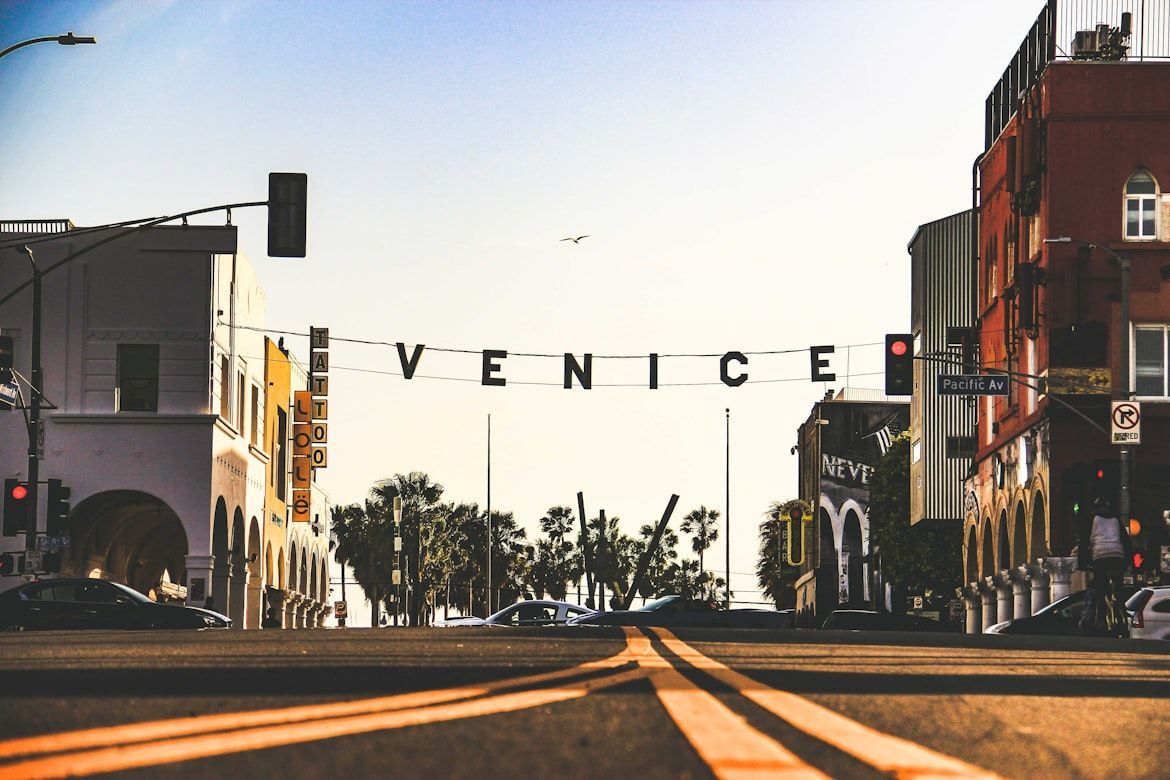
Venice, California
 Credit: Joshua Stannard
Venice, California, was founded by Abbot Kinney, who aimed to recreate the charm of Venice, Italy. He designed the town with canals, pedestrian bridges, and Venetian-style architecture.
Kinney envisioned it as a seaside resort with a romantic, European feel. The canals became a key attraction, drawing visitors and shaping the town's unique identity.
Barcelona, New York
 Credit: Ken Cheung
Barcelona, New York, was originally called Portland and laid out in 1813. In 1836, a local businessman who had spent time in Spain urged the name change to Barcelona.
The village thrived as a harbor in the 1830s and 1840s, but declined after railroads took over regional transport. It later became part of the Town of Westfield.