Have you heard about these?
You might not know this about these 10 literary characters
Published on October 22, 2026

Many literary characters have transcended their stories, a few of them becoming universal archetypes. But despite beign known by all, readers continue to learn new things about their favorite characters. Who was the inspiration for Shelock Holmes? What famous wizard was named after a cabinet drawer? Which famous playwright coined the name "Jessica"? Here are 10 facts about famous characters that you might not know.
Sherlock Holmes was based on a very observant surgeon

While Sherlock Holmes was not the first widely famous fictional detective (that title belongs to Poe’s C. Auguste Dupin), he has become the blueprint for thousands of literary detectives and investigators. It might be surprising to know that his author, Arthur Conan Doyle, didn’t model Sherlock after a detective, but after a surgeon he had met while working as a clerk at the Royal Infirmary of Edinburgh.
Joseph Bell was a surgeon known for his ability for diagnosis, following an observation-based technique he called "The Method". According to his students, Bell was able to deduce a patient’s ailment, profession, and origin just by looking at them.
Huckleberry Finn was Mark Twain’s childhood friend

Huckleberry Finn is considered by many to be one of the most important characters in American literature. Despite being presented as ignorant, neglected, and superstitious, his innate sense of right and wrong makes him constantly challenge the hypocrisy and prejudices of the Antebellum South, and side with those oppressed and mistreated.
Many might think that Mark Twain constructed the character to serve this purpose, but he was actually inspired by one of his childhood friends, Tom Blankenship. According to Twain, he wrote Huck exactly as Blankenship was: the son of a drunkard, unwashed, poorly fed, and uneducated, but also good-hearted, free, and fiercely independent, a fact that caused the envy and the admiration of his peers.
The Wizard of Oz was named after a file cabinet

To write The Wonderful Wizard of Oz, Frank L. Baum drew inspiration from all sorts of places, such as the 1893 Chicago World's Fair, his childhood nightmares, his mother-in-law, and even political debates. Many believe the titular wizard and the land that gives him his name to be a reference to Australia, colloquially nicknamed "Oz", but the name was actually inspired by the most mundane object imaginable.
Years after the publication of the book, Baum explained that he wanted his magical land to have a short and catchy name, easy to remember. Looking around his office, he noticed that his three-drawer file cabinet was labeled alphabetically, and that the third drawer contained the letters O through Z.
Jessica from The Merchant of Venice was the first Jessica ever
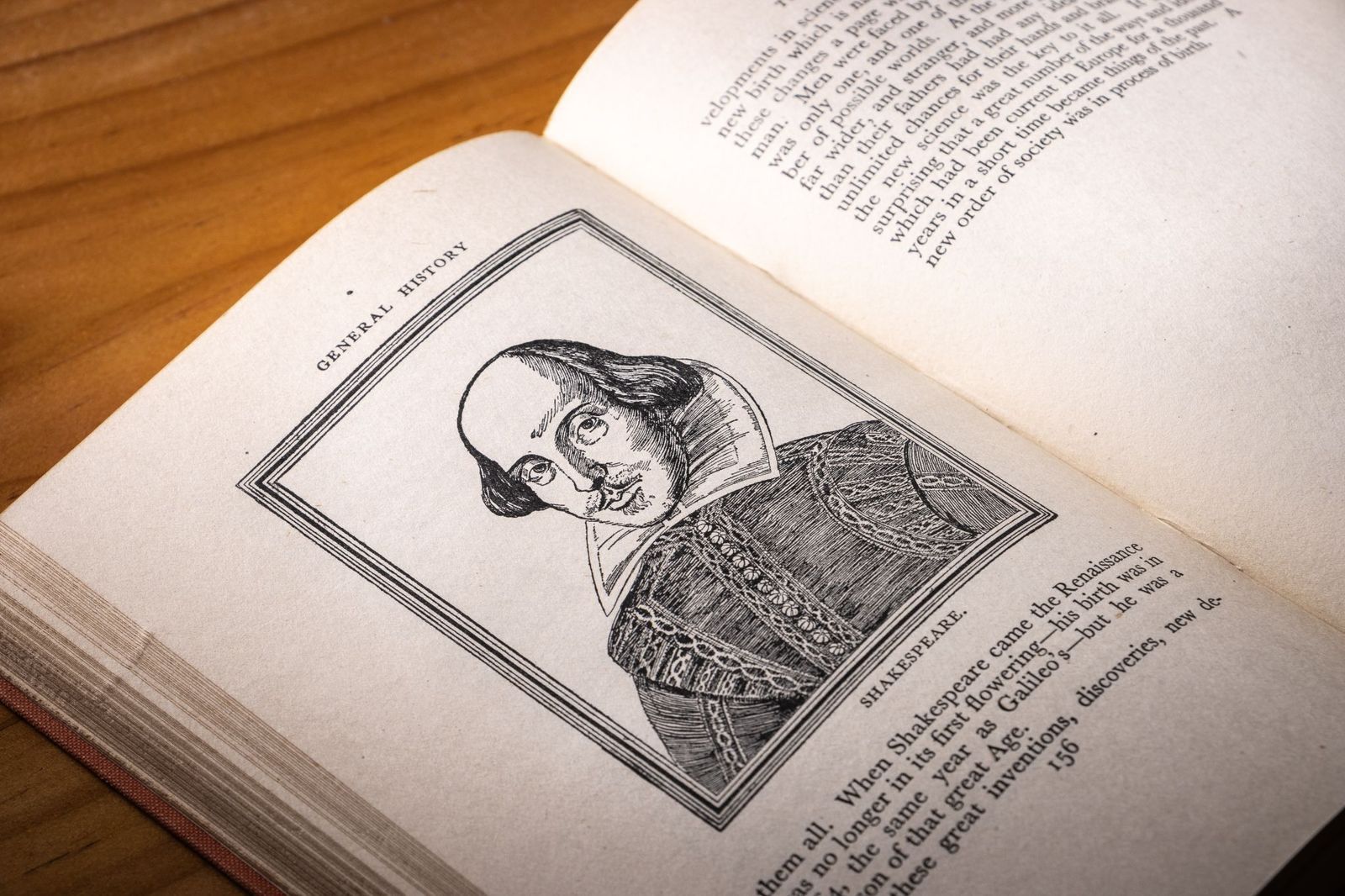
We all know that William Shakespeare created hundreds of new words, or was at least the first to record them, but the name Jessica is not a word one expects to find in this category. Yes, "_The Merchant of Venice"_’s Jessica, Shylock’s daughter, was the first Jessica to ever exist.
It is widely believed that Shakespeare drew inspiration for this name from the Bible, where Iscah (meaning "foresight," "sight," or "to behold") is Abraham’s niece and a minor character in the Book of Genesis. The name is spelled "Iesicca" in the First Folio, as "j" and "i" were not distinguished at the time.
Frankenstein’s creature might have had a name

Although its cinema portrayals have led many to believe that Frankenstein is the name of the famous monster, readers of the book know that it’s actually the name of its creator, and that the monster is commonly referred to as "the creature", unnamed and unwanted by its maker.
According to some of her contemporaries, Mary Shelley had named her character "Adam" and had referred to it as such during a public reading of the novel. While this was never confirmed by Shelley, Victor briefly considers the name "Adam" in the story as a nod to the "new man" created, and later on the creature compared itself to Adam.
The Professor from Narnia might be an homage to J.R.R. Tolkien

The Professor in "The Lion, the Witch and the Wardrobe" might not seem an important character in The Chronicles of Narnia. Still, once the reader realizes he and "The Magician’s Nephew"’s Digory Kirke are the same person, he becomes crucial to the story, a fact quite ironic considering that many believe the Professor to be inspired by J.R.R. Tolkien, who openly disliked the saga.
Although Professor Kirke was partly modelled on and named after Lewis’ strict childhood tutor, William T. Kirkpatrick, readers have noted many coincidences between the Professor and Tolkien, such as both being young orphans, indirect creators of a fantasy world born from a tree, and having academic and intellectual interests.
Moby Dick was a real whale

Moby Dick has been seen as representing many things, such as fate, the power of nature, evil, human internal struggles, or just maybe the absurdity of reality, while Captain Ahab’s relentless quest for vengeance has been traditionally interpreted as the search for answers in a confusing and deceptive world. But did you know that all this symbolism is built on a real-life whale?
Mocha Dick was a leucistic, or albino, sperm whale that lived in the southeastern Pacific Ocean in the early 19th century, usually sighted near Mocha Island off the coast of Chile. There are at least a hundred skirmishes registered between whalers and Mocha Dick —including the sinking of a whaling ship in 1820. The whale was allegedly killed in 1838, although some sailors claim to have seen him after that date.
Jean Valjean and Inspector Javert are inspired by the same person
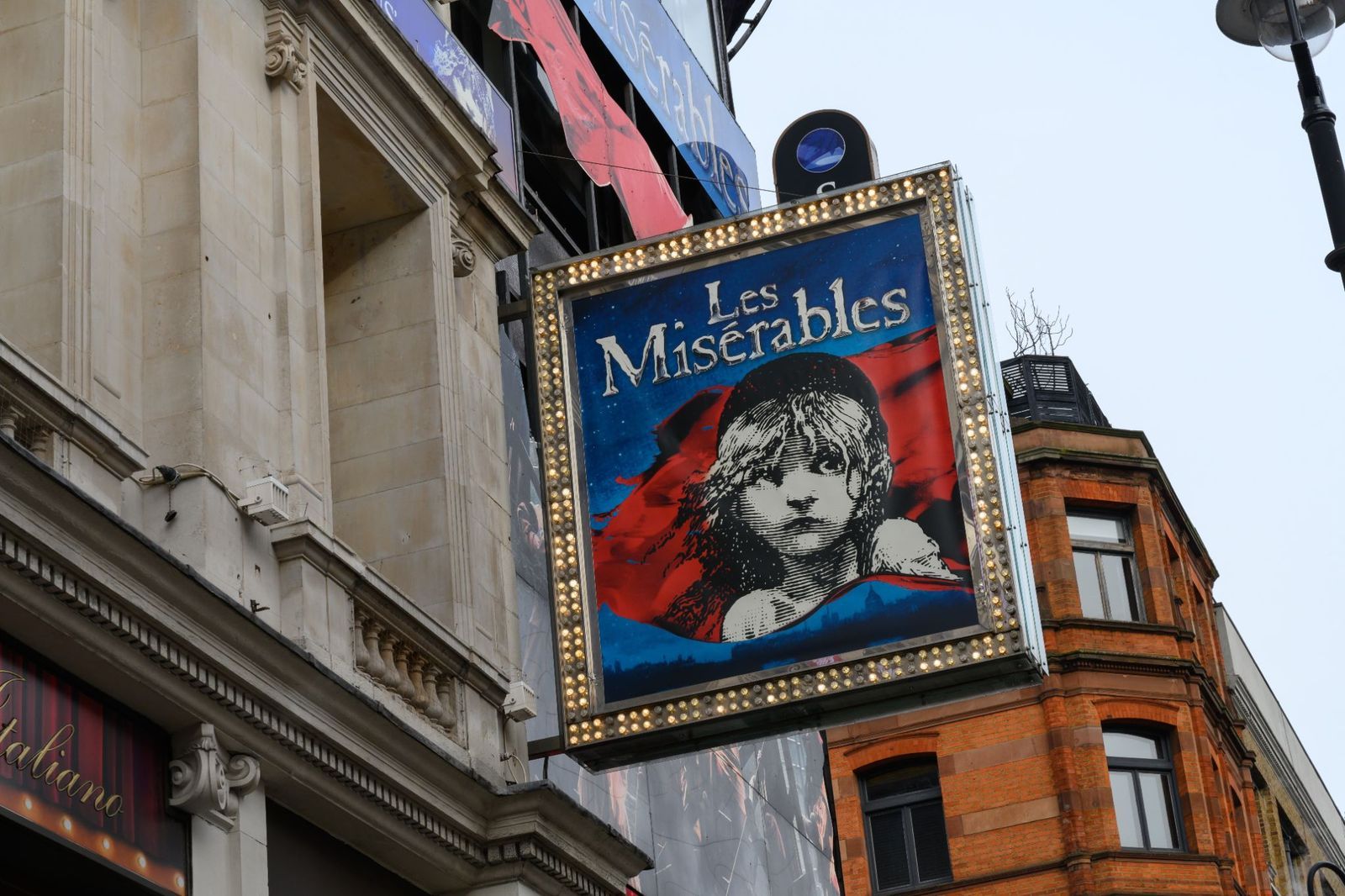
If you read Victor Hugo’s Les Misérables or watched the musical inspired by it, you know that the characters of Jean Valjean and Inspector Javert stand on opposite sides of a conflict: Can people change? While Jean Valjean champions the power of compassion and mercy, Javert sees people’s character as fixed and adheres to rigid law and mechanical justice.
This stark contrast starts making sense when we learn that both characters are based on the same person, Eugène François Vidocq, a famous criminal later turned police detective. Jean Valjean and Javert are two faces of the same coin, the reformed criminal and the ruthless enforcer. In the end, however, one side has to prevail, and it is the side of compassion, which also fits Vidocq’s history as an enforcer who, according to the accounts of the time, refused to arrest petty thieves who stole out of necessity.
Poirot was the first (and only) fictional character with a front-page obituary

If Sherlock Holmes was the greatest detective of 19th century literature, we can argue that Hercule Poirot is a main contender for that title in 20th century detective novels. The most famous of Agatha Christie’s leads, the Belgian detective starred in 33 novels and over 50 short stories, captivating readers with his personal quirks, his infallible method, and his deep understanding of human nature.
It is not surprising, then, that the death of such a beloved character was a monumental event. Curtain: Poirot's Last Case, which closes the detective’s career with his passing, was written around World War II, but only published in September of 1975, when Christie’s own health began to fail. A month earlier, the New York Times had published a front-page obituary of the fictional detective, announcing his passing in England, an homage no other literary character has received.
Heathcliff is an ambiguous character on purpose

The countless cinematic adaptations of Emily Brontë’s Wuthering Heights have come across the same dilemma: How should Heathcliff, one of its tortured protagonists, be represented? Is he Irish? Is he Romani? Is he black? Is his appearance relevant to the story? The answer is simple, and yet incredibly complex at the same time.
Emily Brontë’s description of Heathcliff is deliberately ambiguous. He is described as "dark", characterized as Romani, South Asian, Irish, Chinese, or of mixed heritage, while some hints suggest he is an illegitimate child, but no clue about his parents is given to us. In the end, the correct answer doesn’t matter. Heatcliff could be any of these things, because he is an outsider and a foreigner. His appearance is important because it visually sets him apart from Cathy and Edgar, but how to interpret his background is for the reader to imagine.